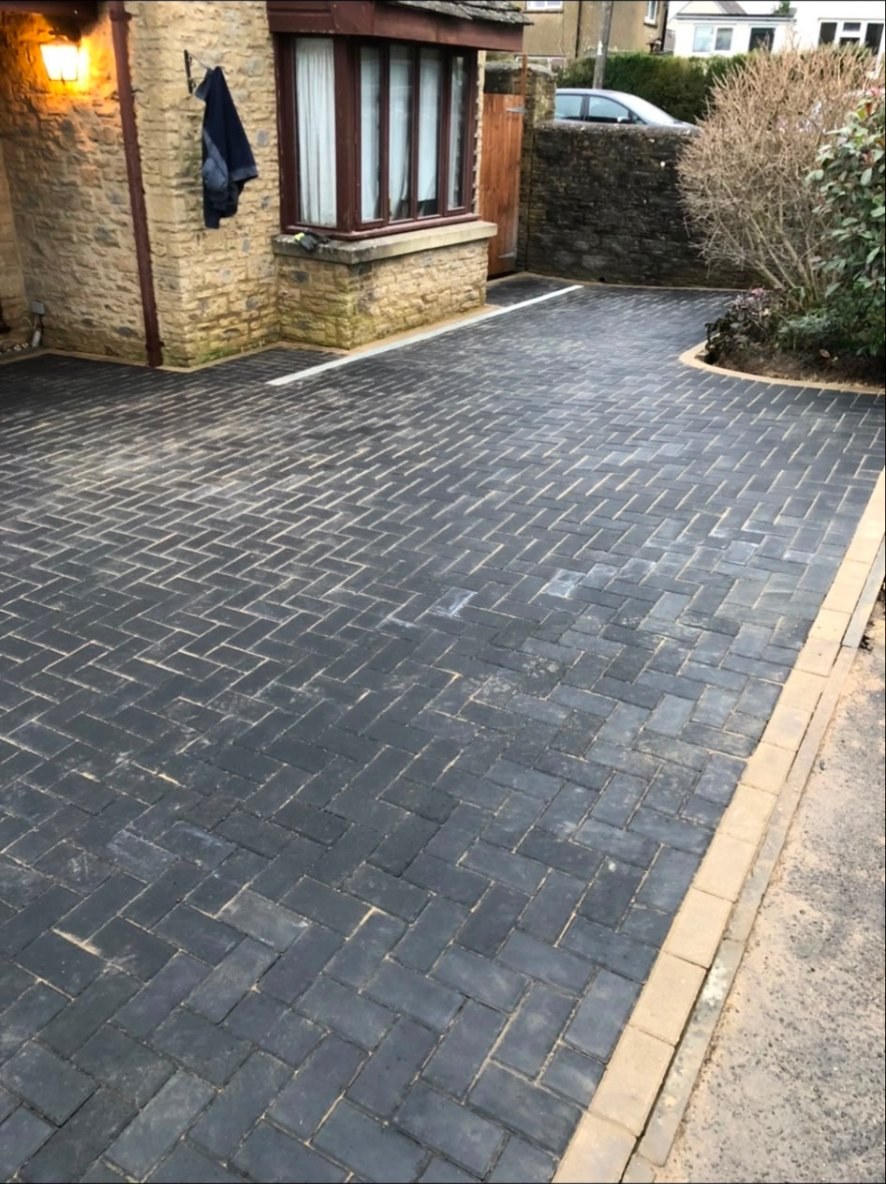
Charcoal herringbone block paving driveway with light-coloured border in front of a stone cottage.

Block Paving · Cheltenham & the Cotswolds

Block Paving in CheltenhamEngineered drivewaysthat stay flat for 20+ years.

Concrete and clay block paving laid on a properly designed sub-base with concrete edge restraint, kiln-dried jointing and SuDS-compliant drainage. Built to take vehicles every day for two decades without sinking, rutting or weed-infested joints.

Block-paved driveways installed across Cheltenham and the Cotswolds. Fully insured.

15+
Years experience
400+
Projects completed
5 yr
Workmanship guarantee
Fully insured
Fully insured
Free
Response time

Overview

What block paving actually involves - and when it's the right call.

What it is

Block paving uses individually-laid concrete or clay blocks (typically 200x100x50mm or 200x100x60mm) interlocked over a granular sub-base and bedding course, with kiln-dried sand vibrated into the joints to lock the system. The interlock - not the bedding - is what carries load.

Who it's for

Homeowners wanting a hard-wearing, repairable, vehicle-capable driveway or front-garden surface. Particularly suited to family homes with multiple cars, properties needing distinct parking and pedestrian zones, and conservation areas where colour and texture flexibility matters.

When it's needed

Replacing tarmac that has failed at the edges or cracked, converting front garden to off-street parking, after a new dropped kerb is installed, or when an existing block driveway has lost its sub-base integrity and is rutting under wheels.

Why professional installation matters

A block driveway done correctly will take 5+ tonnes per axle daily for 20+ years. Done badly, it ruts within a single winter under a family car. The variables - sub-base depth, edge restraint, bedding gradation, jointing sand and compaction - are invisible once finished, which is exactly why most failures originate there.

The cost of getting it wrong

What happens when this job is delayed - or done badly.

Block paving is the most commonly mis-installed driveway surface in the UK. The product itself is mature and well-specified - the failures sit almost entirely in groundworks. Three failure modes account for nearly every block-paving rescue job we attend.

Wheel-track rutting

Sub-base under 150mm, or not compacted in 75mm layers, allows the granular layer to consolidate under wheel loads. Two parallel ruts develop in the parking position within 6–18 months.

Edge spread and corner loss

Without a concrete haunch behind the perimeter blocks, the edge migrates outward, the interlock breaks down, and individual blocks rotate out of position. The 'wave' along the driveway perimeter is the visible symptom.

Weed-infested, sunken joints

Without re-sanding every 2–3 years (or with the wrong jointing sand), joints lose their interlock function. Weeds, moss and algae establish; individual blocks rock and crack.

Common mistakes we see on rescue jobs

  • Laying blocks directly on sand without a 150mm+ MOT Type 1 sub-base.
  • Omitting concrete haunch behind perimeter blocks 'to save time'.
  • Using building sand instead of grit sand for the laying course (causes pumping and settlement).
  • Skipping the final whacker pass with rubber matting once jointing sand is in.
  • Installing without surface drainage - front-garden conversions over 5m² are legally required to be permeable or drain to a soakaway.
  • Mixing block types and thicknesses (e.g. 50mm pedestrian and 60mm vehicle in the same area) - guaranteed failure at the joint.

The Millpond Process

A defined, documented process from first visit to handover.

  1. 01

    Survey & design

    Measure, identify drainage outfall, check existing falls, confirm dropped-kerb status. Material and pattern chosen with samples on site.

  2. 02

    Excavation

    Dig to 250–300mm below finished level for vehicle areas. Geotextile separation membrane on clay subgrades.

  3. 03

    Sub-base & edges

    150–200mm MOT Type 1 in 75mm layers, fully compacted. Concrete haunch behind perimeter blocks before any laying starts.

  4. 04

    Laying & screeding

    30–40mm grit-sand laying course, screeded true. Blocks laid in chosen pattern (herringbone for vehicle areas), tightly butted, cuts marked and saw-cut.

  5. 05

    Jointing & compaction

    Kiln-dried sand brushed in. Plate compactor with rubber matting passes vibrate sand into joints. Final top-up and sweep. Handover and care guide.

What you actually get

Specific, measurable outcomes - not promises.

Repairable in place

Damaged blocks lift and replace individually - no resurfacing, no patches. Spare blocks kept on file by us for future call-back.

20+ year lifespan

Correct sub-base and interlock specification means decades of vehicle traffic with no rutting.

Pattern and colour flexibility

Herringbone, stretcher, basketweave, soldier-course borders, contrast banding - all without specialist tooling.

SuDS-compliant options

Permeable block paving (e.g. Marshalls Priora) meets SuDS legislation for driveways over 5m² - no planning application required.

Adds parking value

Off-street parking adds 5–10% to property value in Cheltenham - and unlocks lower car insurance premiums.

Resists oil, salt and frost

Concrete blocks are sealed in manufacture; rock-salt de-icing won't pit them, oil drips wash off, frost cycles don't damage the surface.

Materials, methods & variations

Everything you should know before commissioning the work.

Block paving's reputation depends on installation specification. The cost-quality gap on a Cheltenham block driveway is rarely the block itself - it's whether the installer laid 150mm of sub-base or 75mm, whether they concreted the edges or not, and whether they re-sanded after final compaction. The detail below covers each variable.

Block types and dimensions

Concrete block (50mm pedestrian, 60mm vehicle) is the standard. Clay block (50/65mm) offers superior colour stability and a traditional aesthetic. Permeable block (60/80mm with widened joints and clean stone joint-fill) is required by Building Regulations for driveways over 5m² that don't drain to a permeable area.

Sub-base depth and material

MOT Type 1 (40mm down to dust) is the standard. Pedestrian-only areas: 100–150mm. Vehicle driveways: 150–200mm. Clay or peat subgrades: add geotextile separation membrane to prevent pumping. Compaction in 75mm maximum layers with a 250kg+ vibrating plate.

Edge restraint

Concrete haunch (C20 minimum) on the outside of perimeter blocks, 100mm wide and 100mm deep, is non-negotiable. Without it the entire driveway gradually walks outward and the interlock fails. Kerbs, channels and edging stones are bedded into the haunch for higher-load areas.

Laying course and jointing

30–40mm grit sand (washed concrete sand, not building sand), screeded true, never compacted before block laying. Joints 2–5mm. After laying, kiln-dried jointing sand is brushed across and vibrated in with a plate compactor over rubber matting in two passes - once on dry sand, again after a final top-up.

Drainage and SuDS compliance

Driveways over 5m² either: drain to a permeable soft-landscaped area, use permeable block paving with clean-stone sub-base and joint-fill, or apply for planning permission. We design SuDS-compliant by default and document compliance for your insurer and any future sale.

Patterns and herringbone for load

Herringbone (45° or 90°) is the only pattern with full interlock under vehicle load - the angled joints prevent slab-like movement. Stretcher and basketweave are pedestrian-only. Soldier-course borders provide visual edge and structural restraint at perimeters.

Questions answered

The questions homeowners actually ask before they book.

Still unsure? Call 07834 619294 and speak with the team direct - no call centre, no scripts.

How much does a block-paved driveway cost in Cheltenham?+

Every driveway is priced individually based on size, ground conditions, drainage, surface choice and access. We quote a fixed price after a free on-site survey — no guesswork, no day rates.

How long does a block driveway last?+

20–25+ years with correct sub-base specification and re-sanded joints every 2–3 years. The block itself is rated for 40+ years; failure is almost always groundworks-related.

Do I need planning permission for a new driveway?+

Not if it's under 5m² OR uses permeable construction OR drains to a permeable area. Standard impermeable driveways over 5m² do require planning. We design permeable by default - no application needed in 95% of cases.

Can you remove and dispose of my old driveway?+

Yes. Excavation, breakout and waste disposal are included in every quote. We hold a current Waste Carrier Licence and provide transfer notes on request.

What's the difference between concrete and clay block?+

Concrete is more affordable and offers wider colour range. Clay (fired at 1100°C+) holds colour permanently, doesn't fade in UV, and develops a richer patina with age - at roughly 20–30% premium.

Will weeds grow through?+

Not for the first 3–5 years if jointing sand is correctly installed. Long-term weed control comes from periodic re-sanding (every 2–3 years) - a 30-minute job per visit, which we offer as a maintenance call-back service.

Will it rut where I park?+

Not with a properly designed sub-base. Rutting is a groundworks failure, not a block failure. Every Millpond vehicle driveway uses 150–200mm MOT Type 1 in compacted 75mm layers - the spec that prevents it.

Can I include a soldier-course border or contrast banding?+

Yes. Most installs include a contrasting soldier-course border for visual edge definition. Banding, motifs, address numerals and contrast aprons at the gate are all standard options.

Do you handle dropped-kerb applications?+

Yes - we manage the Gloucestershire County Council application, footway crossing, and coordination with the highways contractor. Typically 6–10 week lead time, which we book into the programme.

A preview of our work

Recent projects across the Cotswolds.

View full portfolio
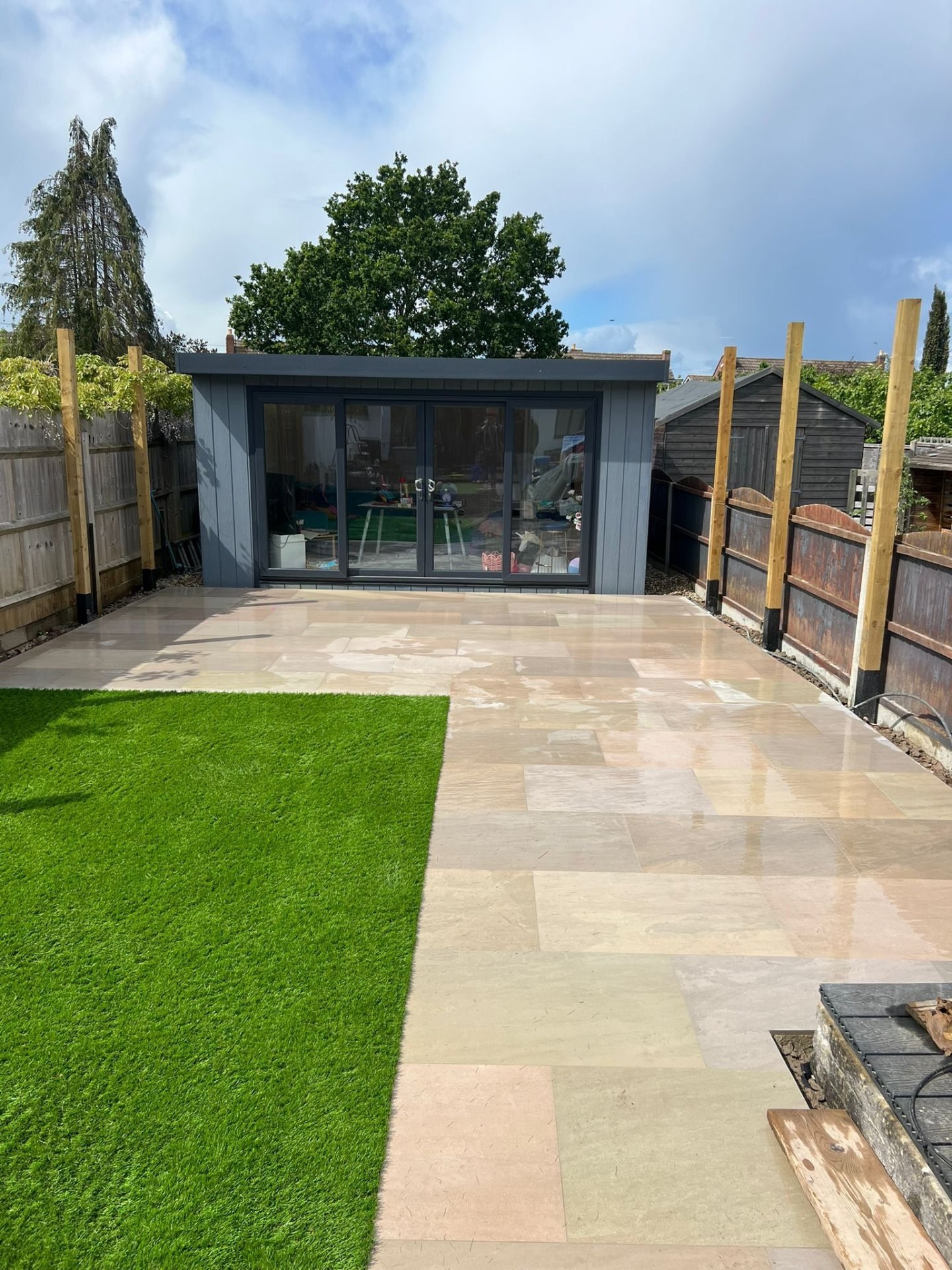
Modern garden landscape with sandstone patio flags, artificial grass, and grey summerhouse.
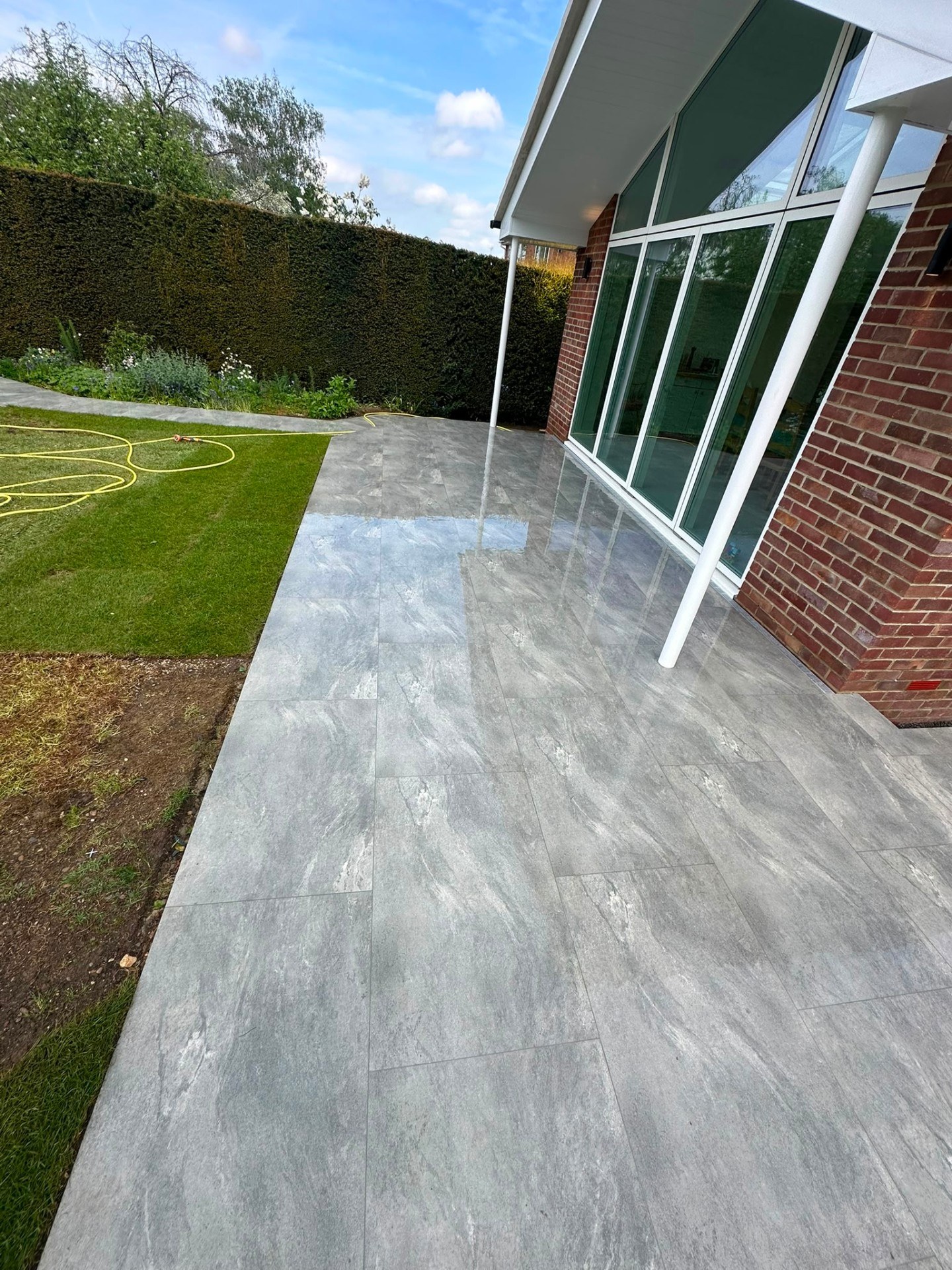
Modern grey porcelain patio paving alongside a fresh lawn and house extension.
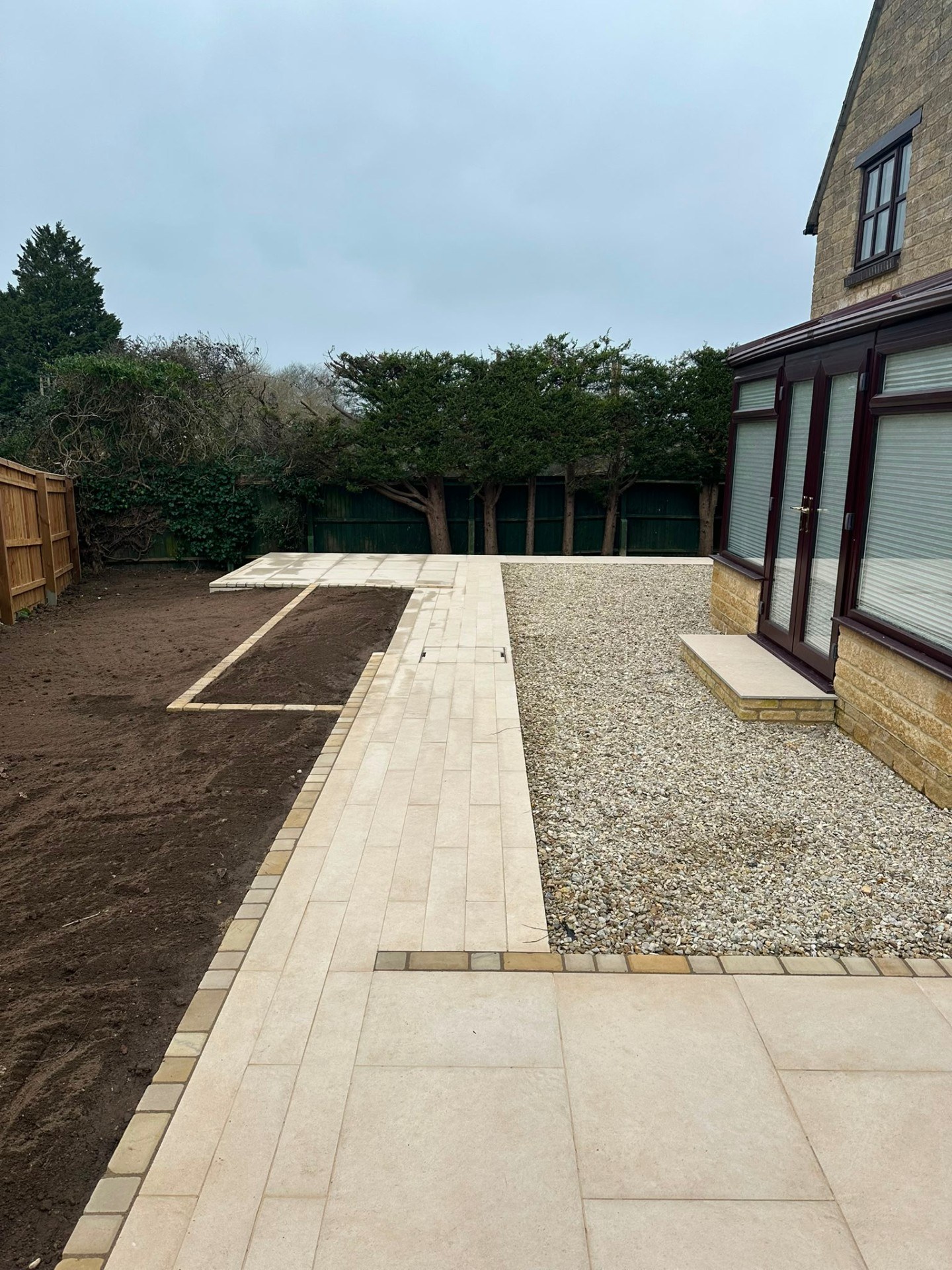
Modern garden landscaping with light porcelain paving, decorative gravel, and new flower beds.
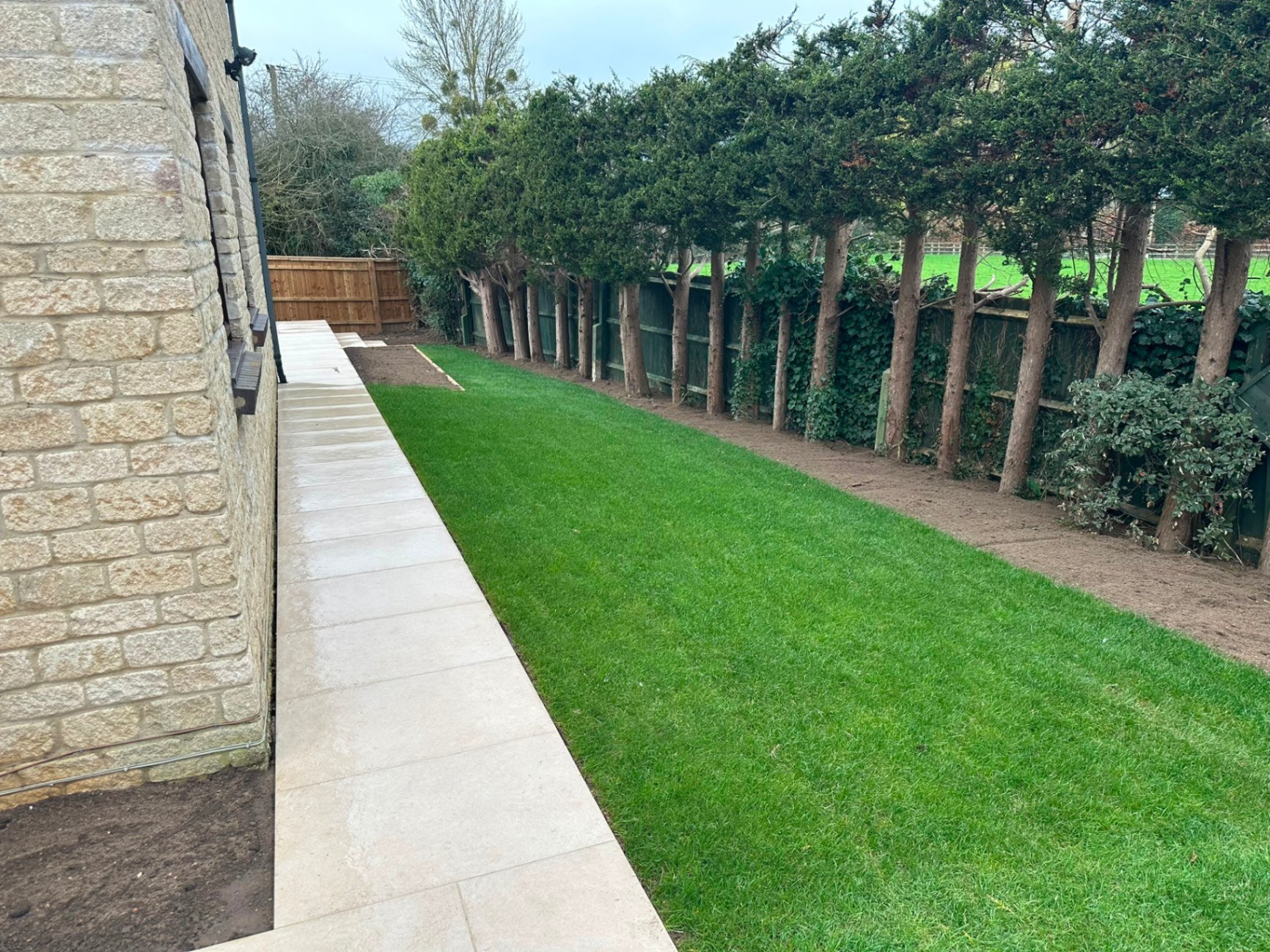
Newly turfed lawn with a smooth porcelain tile garden path alongside a stone house.
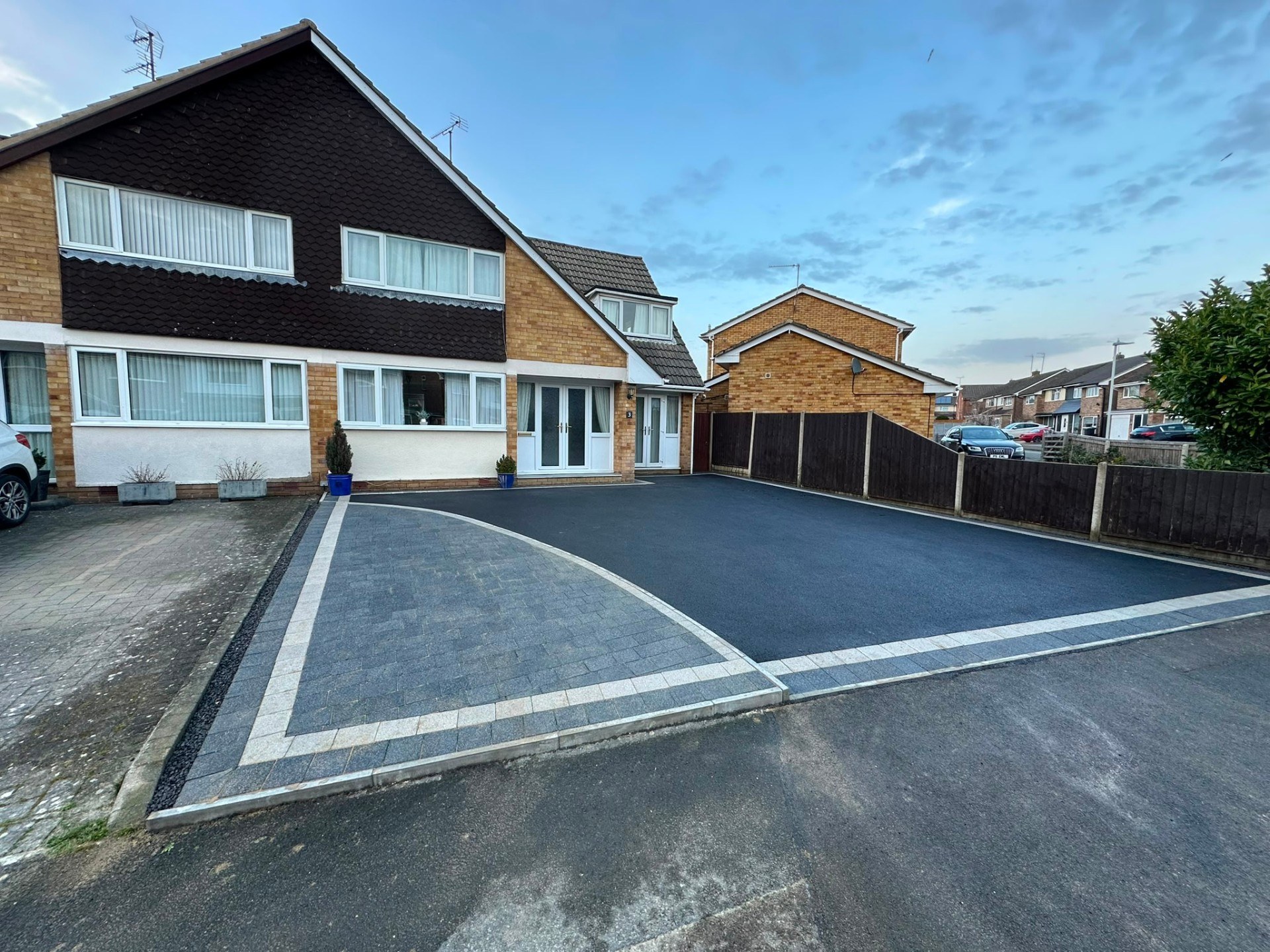
Large dark grey asphalt driveway with block paved border and apron detail in front of a house.
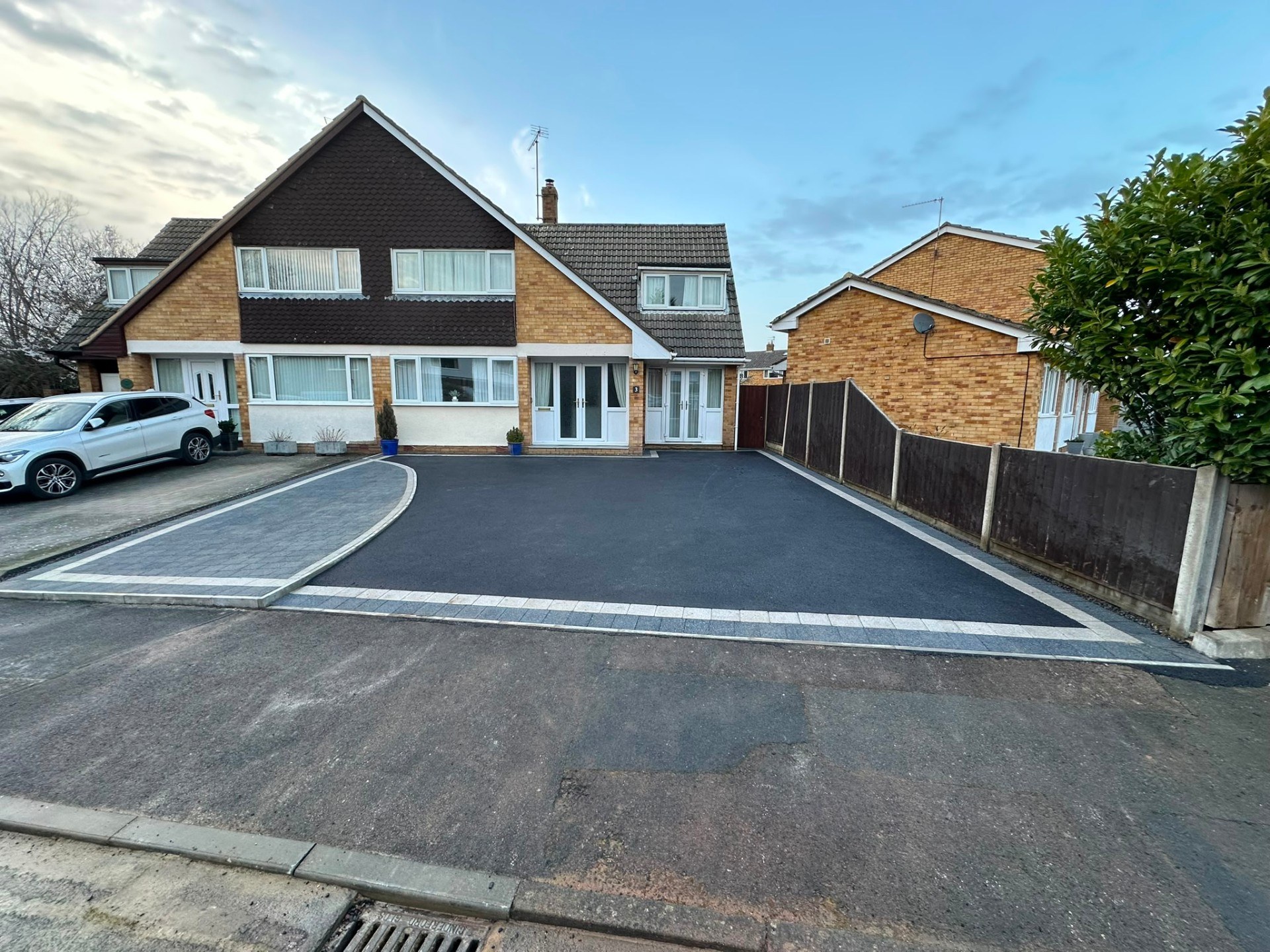
Modern tarmac driveway with decorative block-paving border and matching curved parking bay.
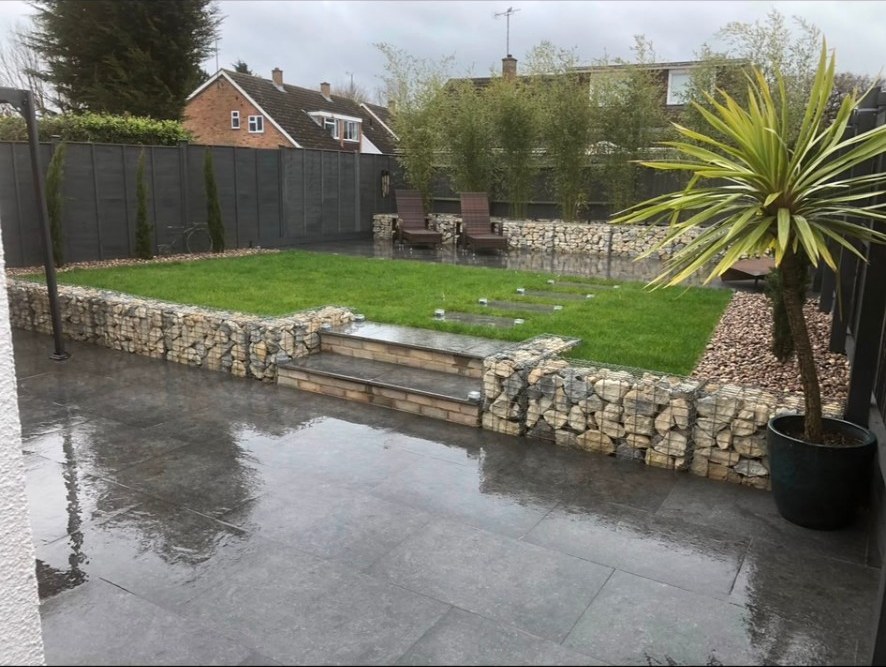
Contemporary garden with grey porcelain patio, gabion stone walls, lawn and bamboo screening.
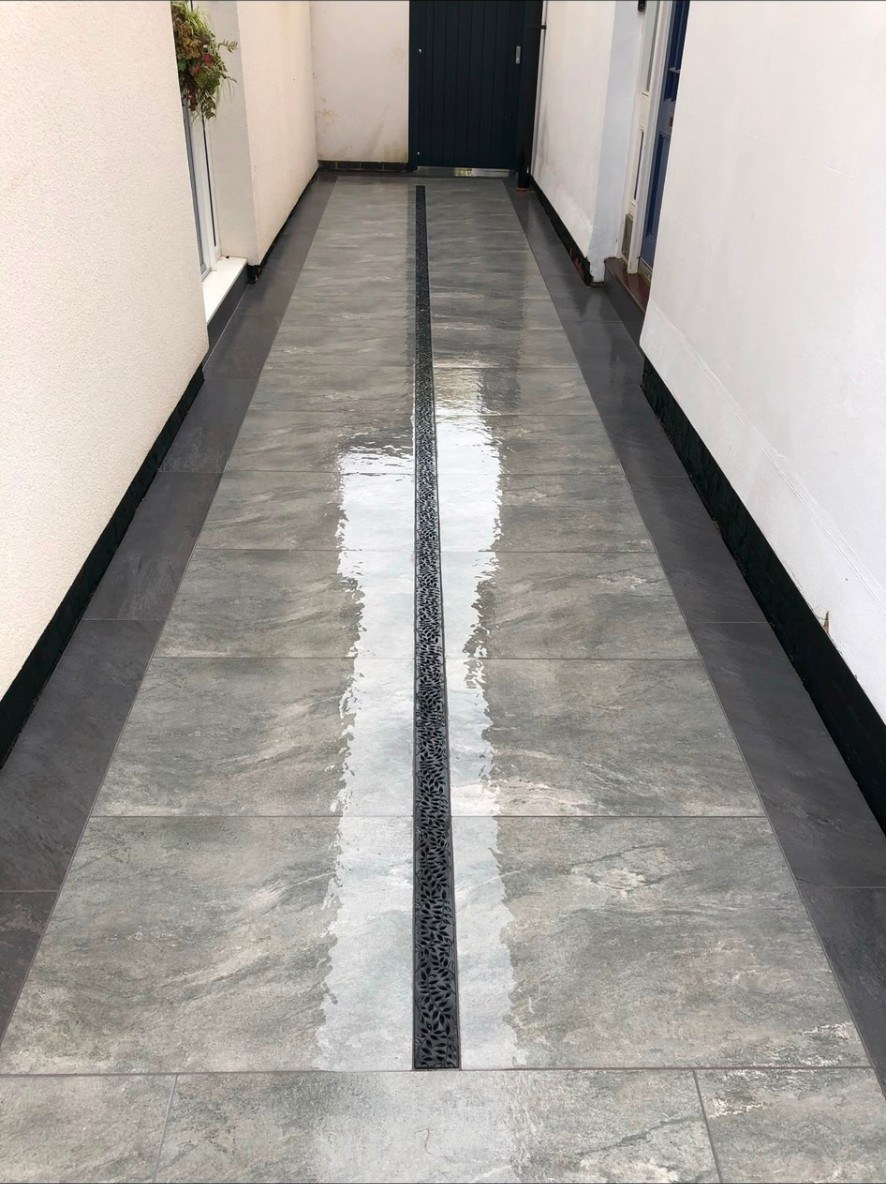
Contemporary grey porcelain paving path with central decorative drainage channel in a side return
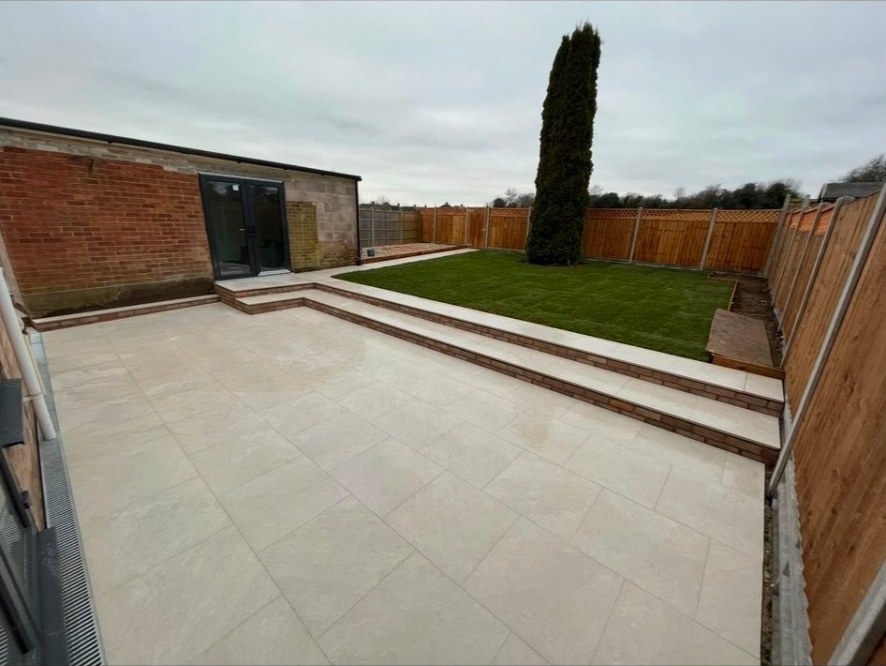
Modern garden with porcelain patio, tiered steps, freshly laid lawn and timber fencing.
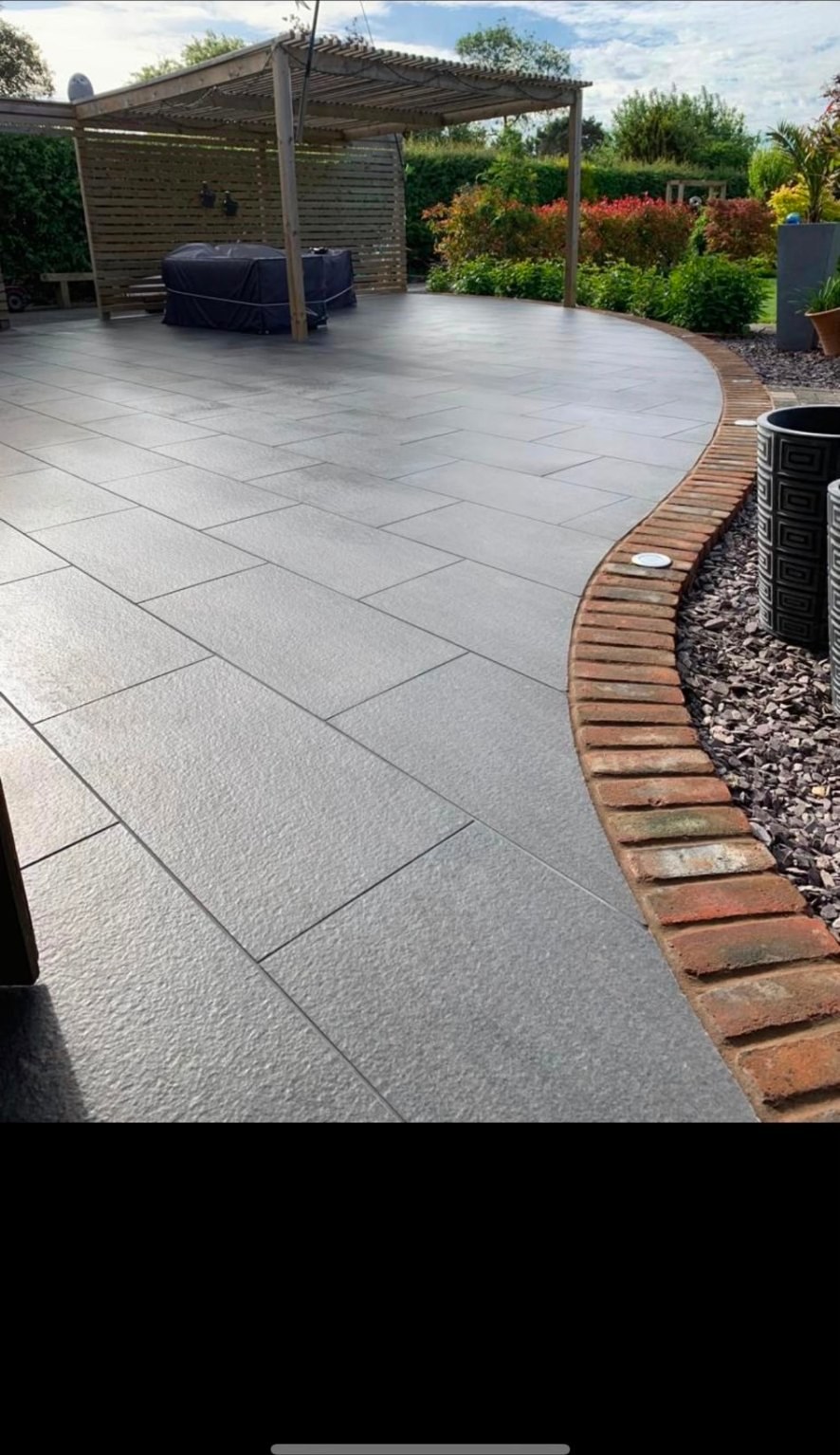
Contemporary grey porcelain patio with a curved brick edge and timber pergola
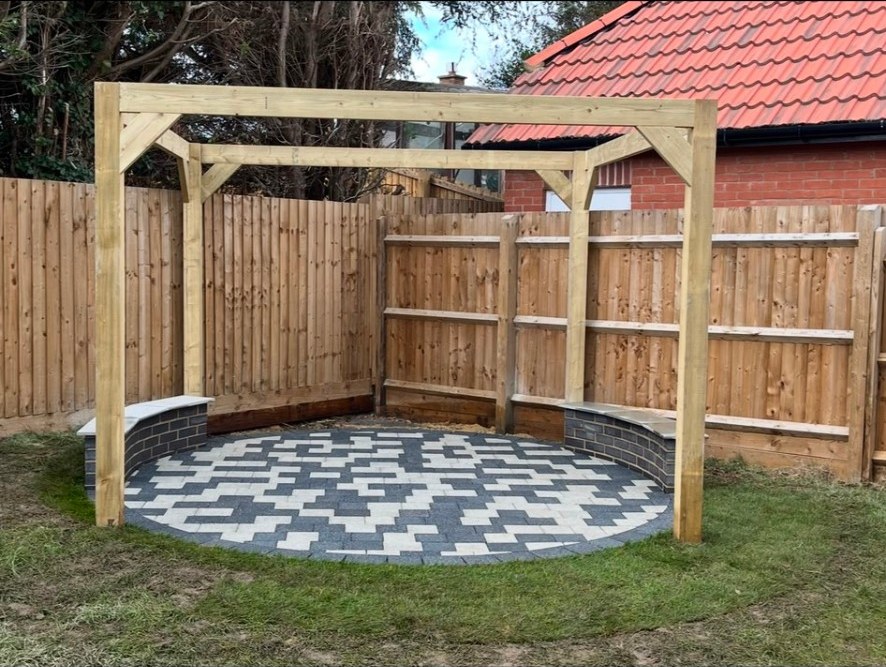
Circular block paving patio with timber pergola, brick seating, and new garden fencing.
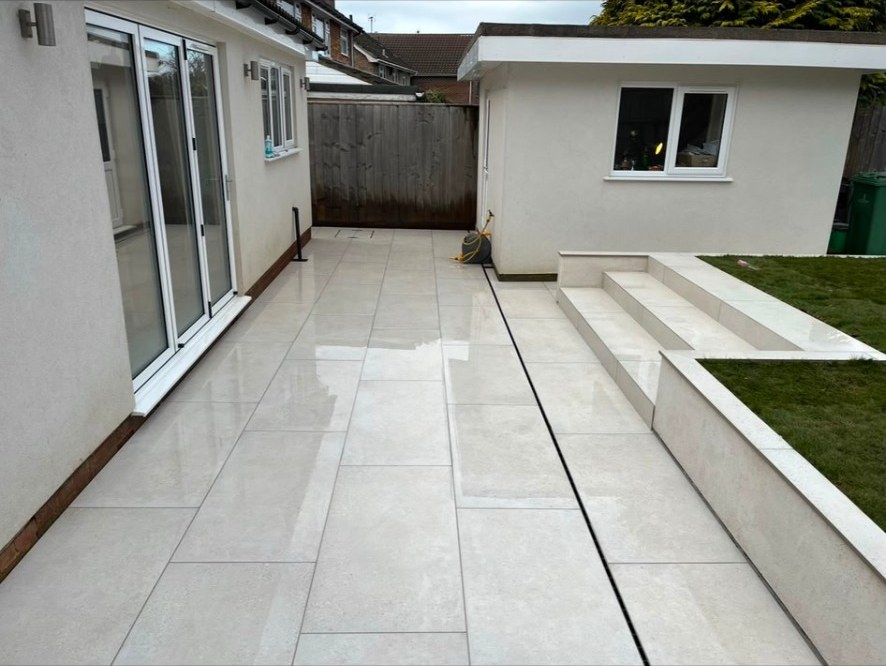
Contemporary light grey porcelain patio with matching steps and integrated drainage

Get a fixed-price quote you can actually trust.

On-site survey, accurate measurements, written specification, itemised pricing and a firm start date. No subcontracted estimators, no pressure, no surprise add-ons mid-build.

Free on-site survey, free written quote

Call NowGet Free Quote