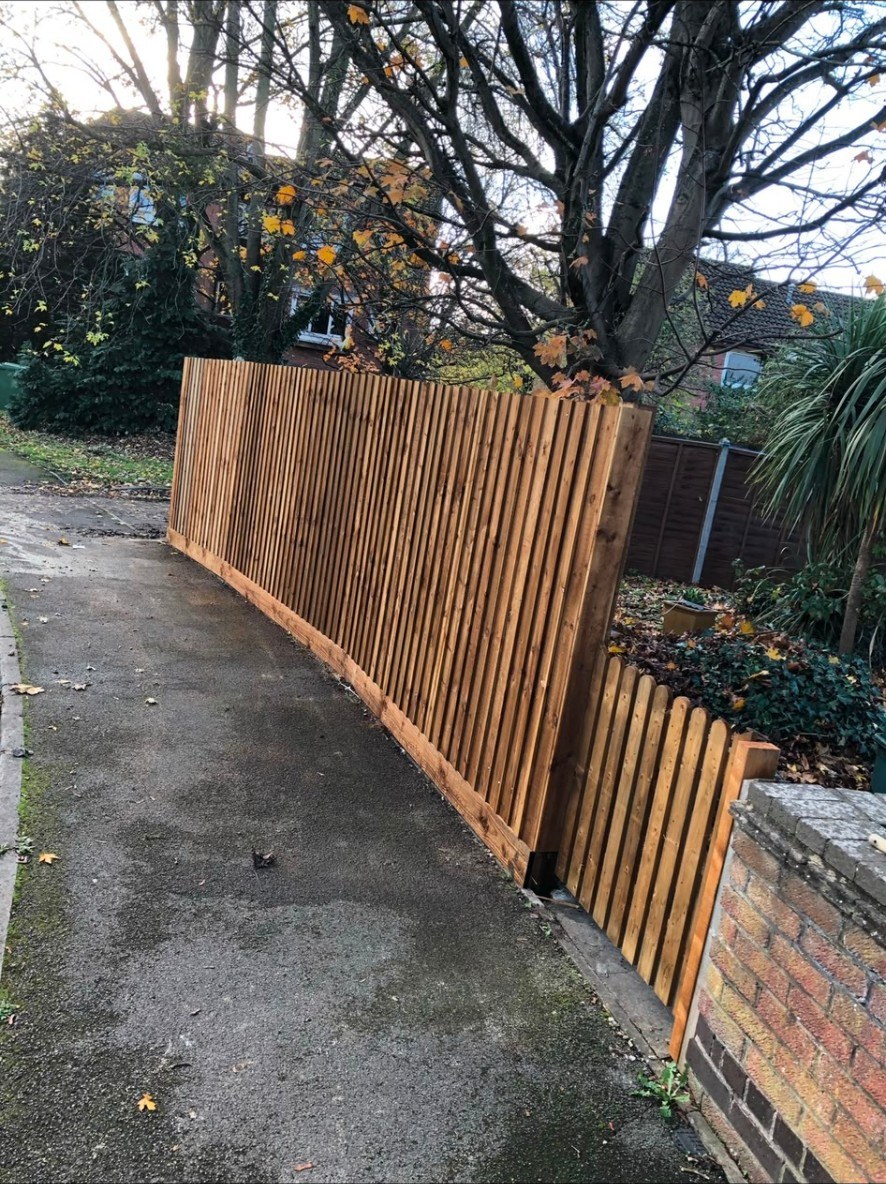
Vertical timber slat fencing and matching garden gate installed along a property boundary.

Fencing · Cheltenham & the Cotswolds

Fencing in CheltenhamConcrete-set posts.Standing in twenty years.

Closeboard, featheredge, slatted, hit-and-miss and bespoke timber boundaries. Concrete-set 600mm minimum, pressure-treated graded timber, galvanised fixings - built to stand through Cotswold winters, not to look good for a season.

Boundary work coordinated with neighbours, party-wall awareness and full ground-condition surveys before quote.

15+
Years experience
400+
Projects completed
5 yr
Workmanship guarantee
Fully insured
Fully insured
Free
Response time

Overview

What fencing actually involves - and when it's the right call.

What it is

Garden fencing is the installation of vertical timber, composite or metal boundaries on concrete-set posts, providing security, privacy, screening and definition of property lines. Quality of materials, post depth and fixing chemistry determines whether the fence lasts 5 years or 20.

Who it's for

Homeowners replacing storm-damaged or end-of-life boundaries, dividing newly extended gardens, adding privacy from neighbouring properties or roads, or installing pet-secure perimeters. Particularly suited to Cheltenham terraces where neighbour coordination matters and Cotswold properties needing rural-style boundaries.

When it's needed

After storm damage (Storm Eunice 2022 and Ciarán 2023 took out an estimated 40% of Gloucestershire's fencing), when an existing fence rocks or leans, when buying a property with deteriorated boundaries, or when planning a garden redesign that needs new perimeters before hard landscaping starts.

Why professional installation matters

A fence is 80% post and 20% panel. The visible panel is what most quotes describe; the post depth, concrete mix and fixing detail is what determines whether it stays vertical through a Cotswold winter. Professional installation means proper post-hole depth (600mm+), correct concrete mix (postcrete or wet C20), and galvanised fixings rated for treated timber.

The cost of getting it wrong

What happens when this job is delayed - or done badly.

Fence failures are predictable and almost universally avoidable. Three failure modes account for the vast majority of replacement work - and all three trace back to corner-cutting at install.

Leaning, rocking posts

Posts set less than 600mm deep, or set in soil/gravel instead of concrete, work loose within 2–3 years. Once a post moves, the rail-to-post fixing fails and the panel sags.

Rot at the post base

Untreated or under-treated timber set in standing water (no drainage below the post) rots through at ground level within 3–5 years. The post snaps in the next high wind, taking panels with it.

Ungalvanised fixings

Bright steel nails and screws used in treated timber react with the timber preservative (copper-based), rust through within 18 months, and the panel detaches from the rail. Galvanised or stainless only.

Common mistakes we see on rescue jobs

  • Setting posts at 450mm depth to save digging time - guaranteed lean within 3 years.
  • Using non-pressure-treated timber 'because it'll be painted' - paint doesn't preserve, treatment does.
  • Skipping the gravel drainage layer below the post - water sits, post rots from the base up.
  • Mixing concrete posts and timber posts in the same run with no design rationale.
  • Installing without checking the boundary line - disputes that end in legal letters.
  • Using bright steel fixings into treated timber - copper-naphthenate corrodes the fixing inside 2 years.

The Millpond Process

A defined, documented process from first visit to handover.

  1. 01

    Survey

    Confirm boundary line, identify neighbour party, check soil type and any underground services. Soil-test for clay, peat or rock affecting post-setting.

  2. 02

    Demolition

    Existing fence removed, posts dug or broken out, debris removed under our Waste Carrier Licence.

  3. 03

    Post-setting

    Holes dug to 600mm minimum (longer for tall fences). Gravel drainage layer at base. Posts plumbed and set in postcrete or wet C20 concrete to manufacturer cure time.

  4. 04

    Panel and rail install

    Cants and rails fixed with galvanised fixings to graded pressure-treated timber. Capping rail and gravel board (concrete or timber) installed to spec.

  5. 05

    Finish & handover

    Site cleared, photos taken, care guide and 5-year workmanship guarantee provided. Optional staining or pre-finishing offered.

What you actually get

Specific, measurable outcomes - not promises.

20-year boundary life

Concrete-set, pressure-treated, galvanised-fixed fencing routinely lasts 20+ years - twice the industry average.

Storm-resilient design

Higher post-spec, hit-and-miss panel options for high-wind sites, and concrete gravel boards prevent rot and storm-related failures.

Privacy without dead-look

Slatted, hit-and-miss and decorative trellis-top options provide privacy without the prison-yard aesthetic of solid closeboard.

Neighbour-friendly install

We coordinate with neighbouring properties on shared boundaries, document the agreement and avoid post-install disputes.

Pet and child secure

No gaps at the gravel board, no climb-able horizontal rails on the inside, gate hardware rated for daily use.

Improves property valuation

Sound boundary fencing is the second-most-cited item on RICS Home Buyer Reports affecting saleability - after roof condition.

Materials, methods & variations

Everything you should know before commissioning the work.

Fencing specification is more involved than it appears. The blocks below cover the variables that determine a 5-year versus 20-year fence - and where most installs cut the corner that costs the homeowner.

Post types and specification

Concrete slotted posts: 50-year life, support timber panels, cost 30–40% more upfront but eliminate post-rot failure mode. Pressure-treated timber posts (UC4 grade, 100x100mm minimum): 15–20-year life, traditional appearance. Metal posts (e.g. DuraPost): galvanised steel, 25-year life, modern aesthetic, expensive.

Panel styles

Closeboard (vertical featheredge) - strongest, most private, traditional Cotswold style. Hit-and-miss - 50% airflow, ideal for high-wind sites, modern look. Slatted (horizontal or vertical) - contemporary, semi-transparent. Lap panels - budget option, 8–10 year typical life, rarely recommended.

Heights and planning

Up to 2m: permitted development on most domestic boundaries. Adjacent to highway: 1m maximum without planning. Conservation areas and listed buildings: often require consent - we flag at quote stage. Trellis or post extensions can take effective screening to 2.5m+ without planning in many cases.

Gravel boards

Concrete gravel boards: prevent timber-to-ground contact, eliminate the primary rot path, 25-year life. Timber gravel boards: cheaper, replaceable, 8–10 year life. We specify concrete as standard on closeboard fences - the cost difference pays back inside the first replacement cycle.

Fixings and treatment

All fixings galvanised or stainless - bright steel is incompatible with pressure-treated timber. Timber: UC4 graded pressure-treated to BS 8417, minimum 12-year warranty. Cut ends sealed with end-grain preservative on every cut.

Gates and ironmongery

Field gates, pedestrian gates, double gates, automated gates - each requires hung-and-latched correctly with rated hardware. Drop bolts, slam locks, automated openers (Came, Nice, BFT) coordinated with electrical first-fix during the build.

Questions answered

The questions homeowners actually ask before they book.

Still unsure? Call 07834 619294 and speak with the team direct - no call centre, no scripts.

How much does fencing cost in Cheltenham?+

Fencing is priced per linear metre after a free on-site survey — quoted to the access, ground and existing structures we find.

How deep should fence posts be set?+

Minimum 600mm for a standard 1.8m fence, 750mm for 2m fences, 900mm+ for gateposts. In every case set in postcrete or wet concrete with a gravel drainage base. Under 600mm is industry-standard corner-cutting that fails within 3 years.

Whose fence is it?+

Deeds rarely state. Common convention: posts on your side = your fence; smooth (good) side faces the neighbour. We check Land Registry plans and coordinate with neighbours before any boundary work, documented in writing.

Can you replace just one panel?+

Yes - repair and single-panel replacement is part of what we do. Honest assessment: if the posts are still sound, we replace just the panel. If posts are loose or rotting, we'll quote the full run rather than putting good money after bad.

Do you handle gate automation?+

Yes - single or double leaf automated gates with Came, Nice or BFT openers, intercom, key-fob and safety-edge integration. Electrical first-fix and final commission coordinated by qualified electrician.

How long does fence installation take?+

A typical garden boundary (20–30m) is 2–3 working days, including demolition and waste removal. Larger projects scale accordingly; gates and automation add 1–2 days.

Will the concrete posts look ugly?+

Modern slotted concrete posts in a grey or buff finish are visually subtle and largely hidden by the panels and capping. Photos of completed work supplied at quote. They are the right call for longevity on long-stay properties.

What's your guarantee?+

5 years on workmanship (post-setting, panel fixing, gate hanging). Materials warranty per manufacturer (typically 12–15 years on UC4 treated timber, 25+ years on concrete posts).

What if a storm takes the fence down inside the guarantee?+

Genuine workmanship failures (post-pull-out from inadequate setting, fixing failure) are repaired free. Genuine storm acts-of-god (tree falls on fence) are an insurance matter - we'll provide a free estimate to support the claim.

A preview of our work

Recent projects across the Cotswolds.

View full portfolio
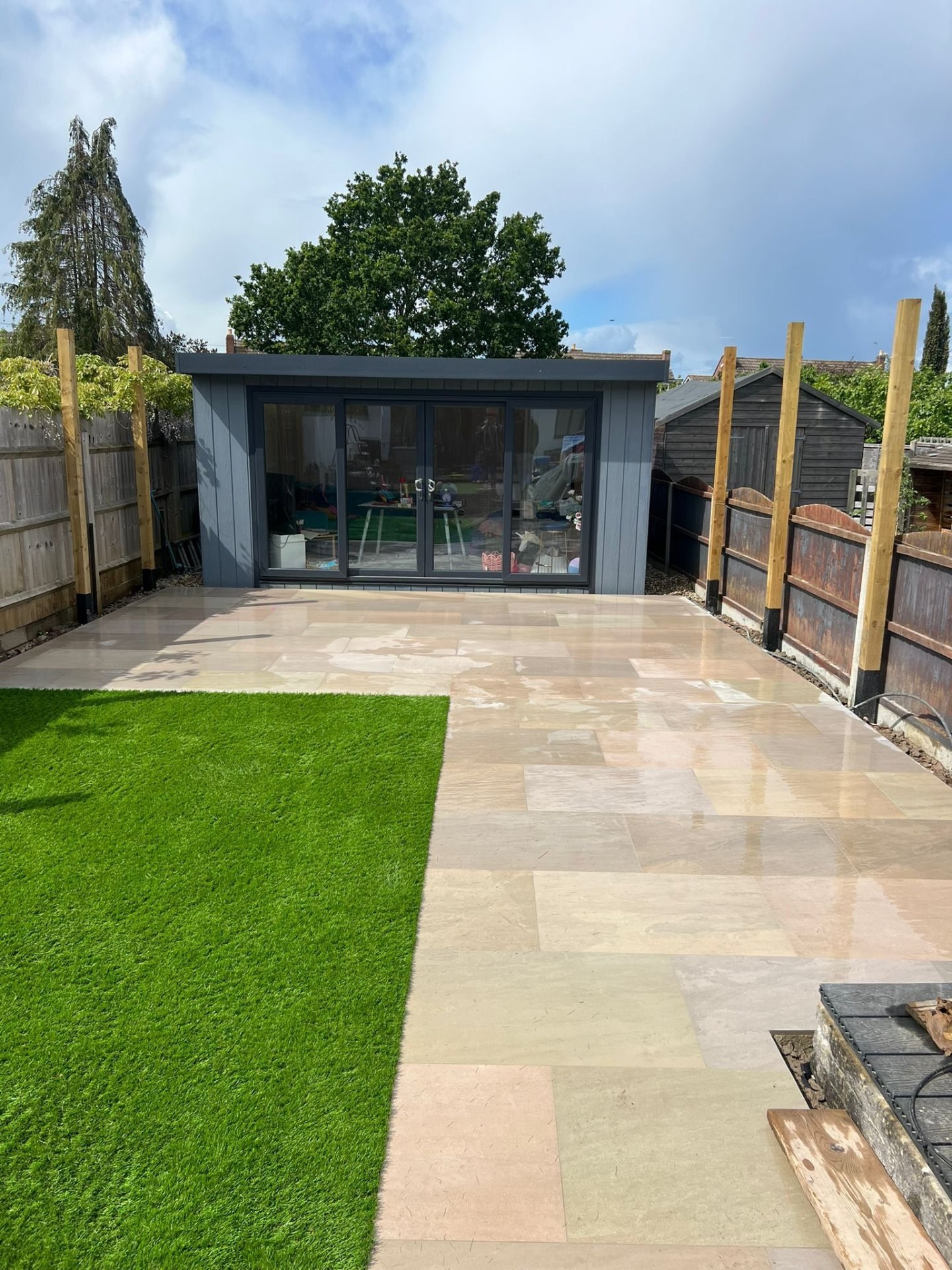
Modern garden landscape with sandstone patio flags, artificial grass, and grey summerhouse.
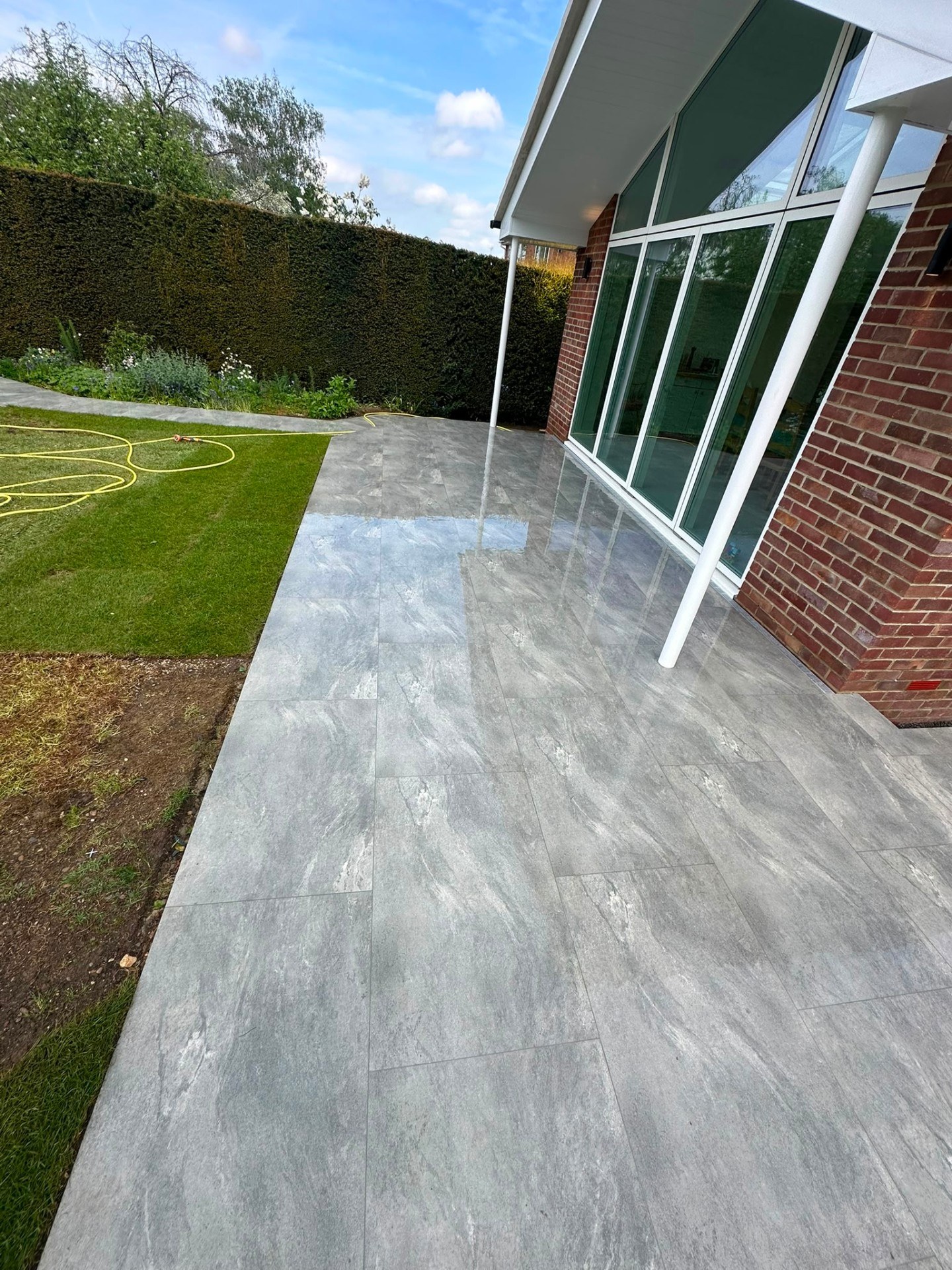
Modern grey porcelain patio paving alongside a fresh lawn and house extension.
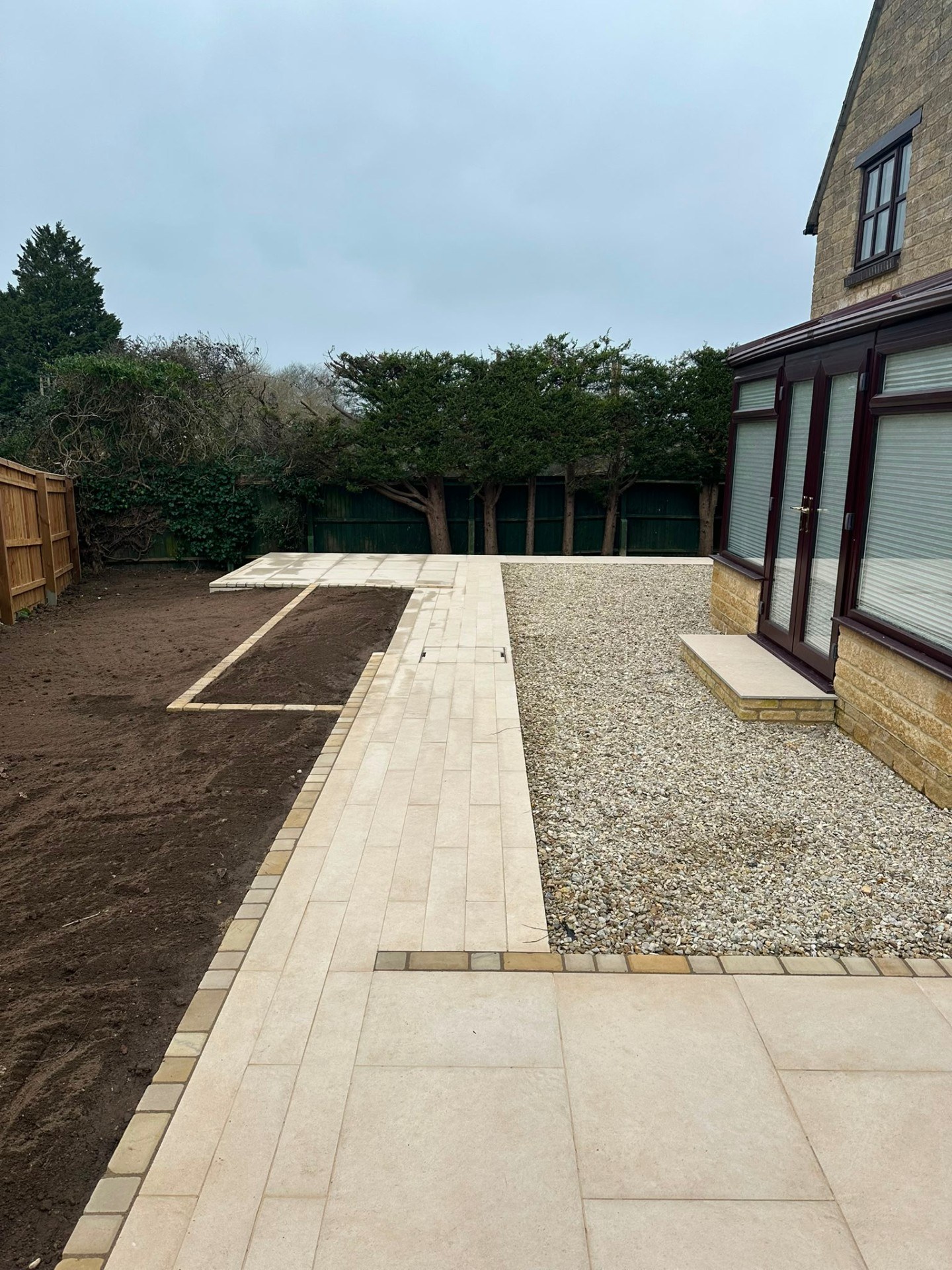
Modern garden landscaping with light porcelain paving, decorative gravel, and new flower beds.
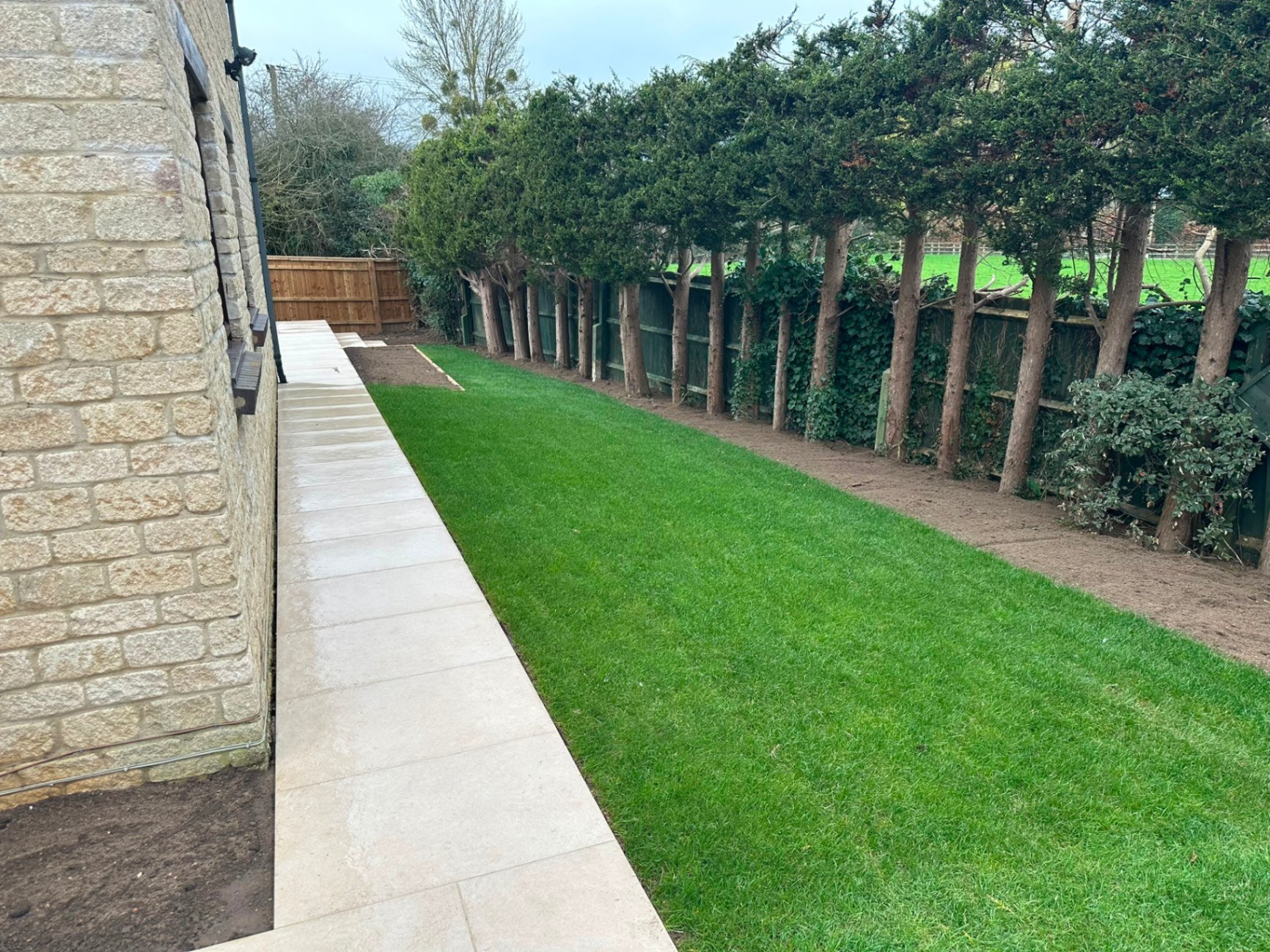
Newly turfed lawn with a smooth porcelain tile garden path alongside a stone house.
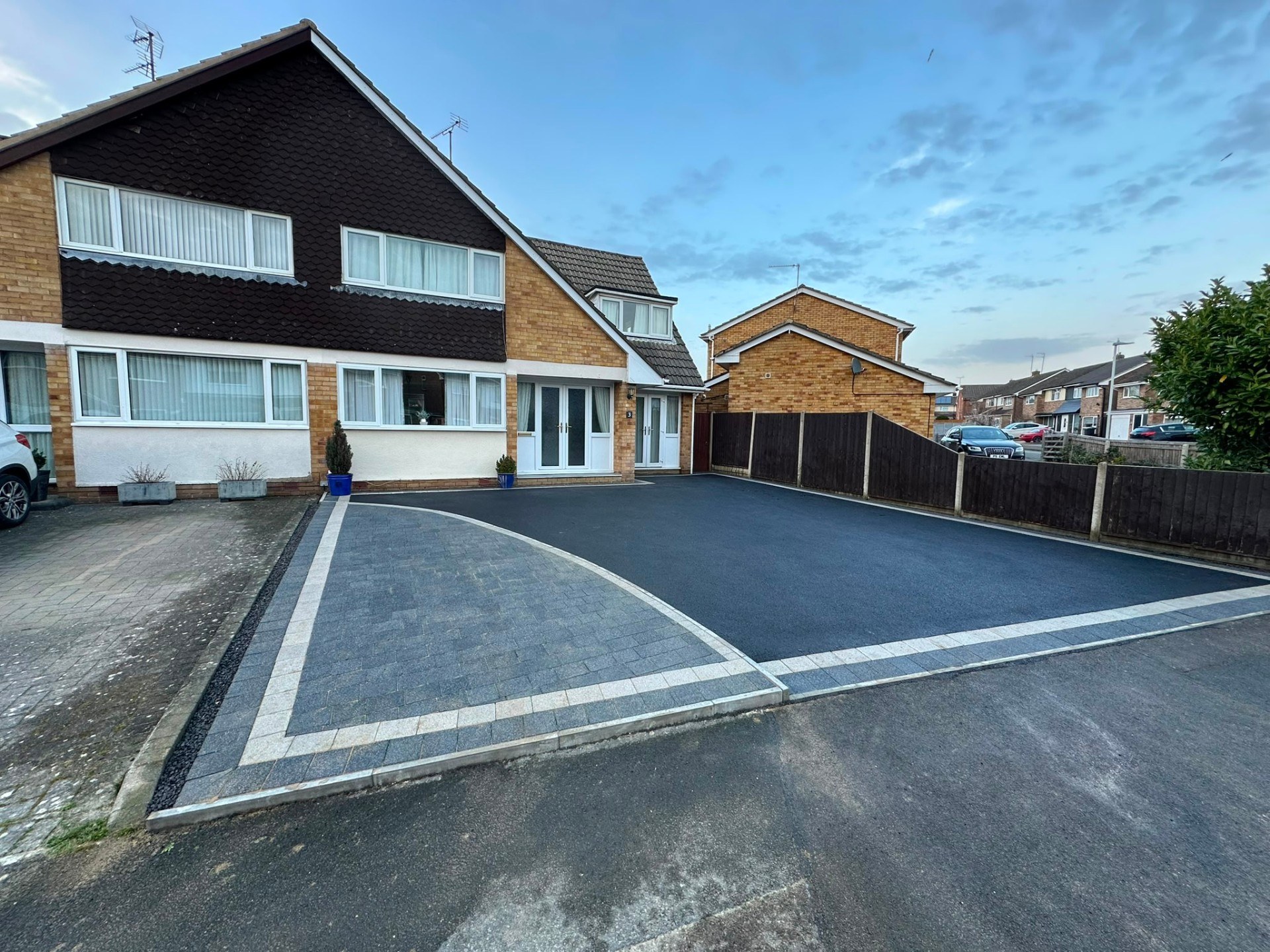
Large dark grey asphalt driveway with block paved border and apron detail in front of a house.
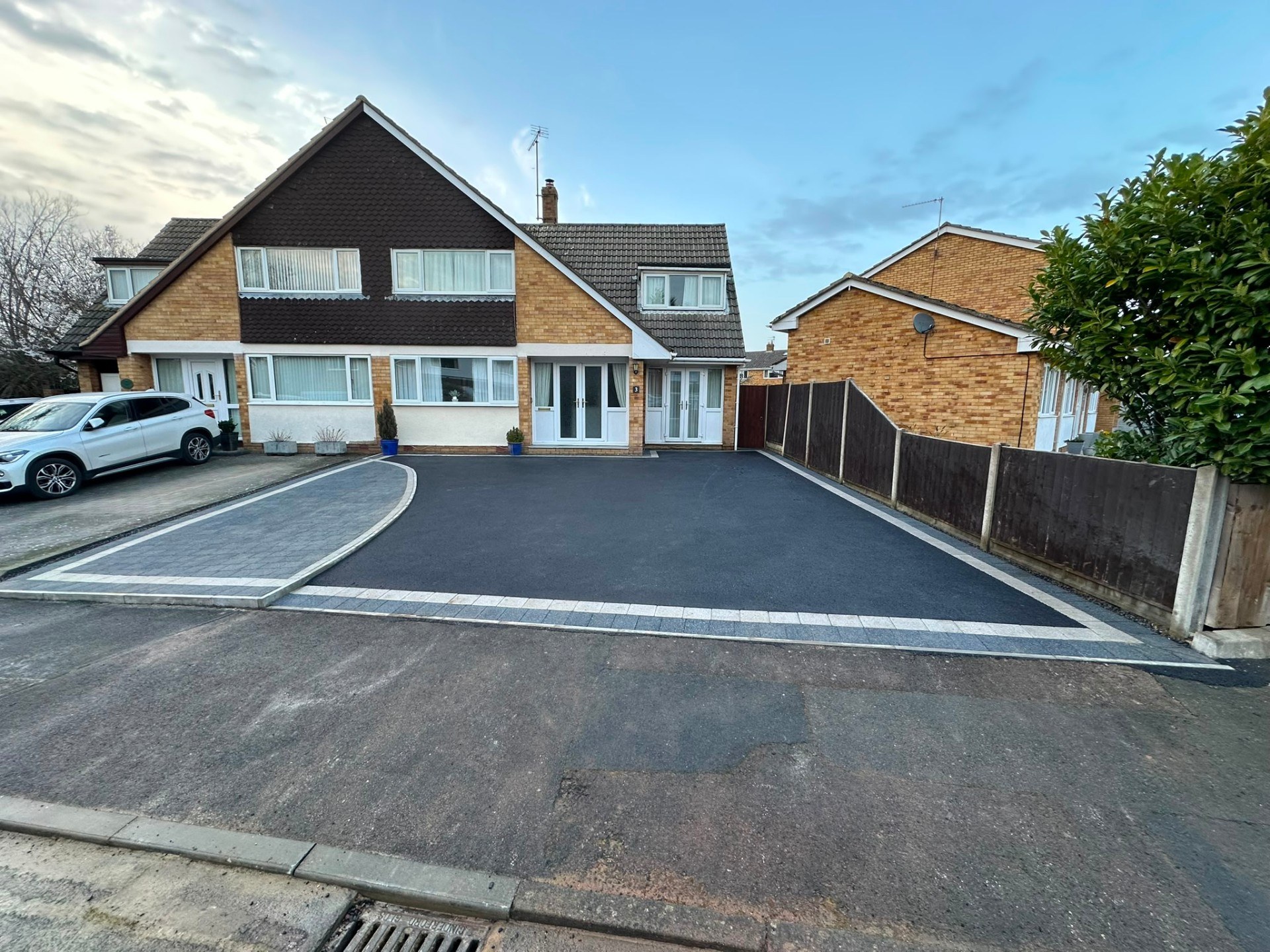
Modern tarmac driveway with decorative block-paving border and matching curved parking bay.
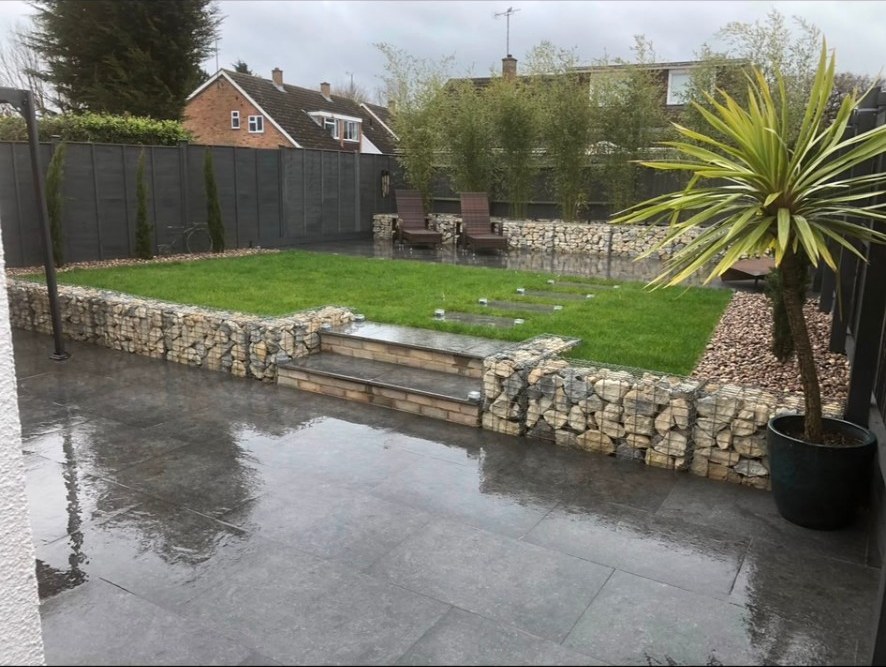
Contemporary garden with grey porcelain patio, gabion stone walls, lawn and bamboo screening.
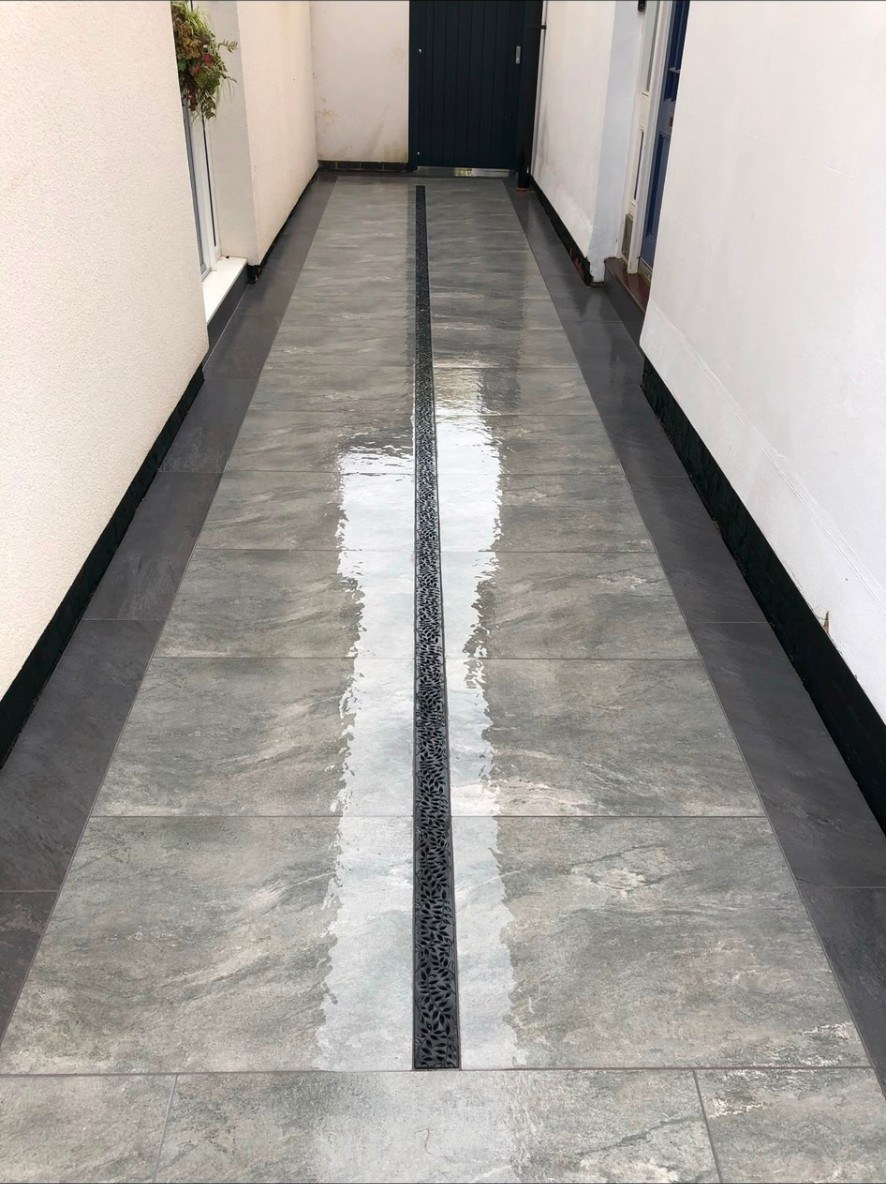
Contemporary grey porcelain paving path with central decorative drainage channel in a side return
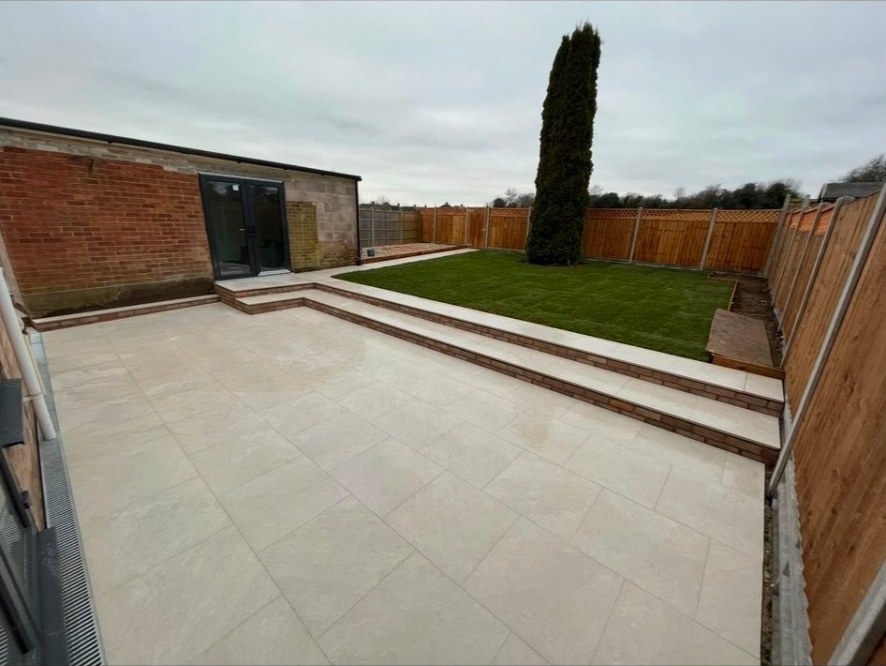
Modern garden with porcelain patio, tiered steps, freshly laid lawn and timber fencing.
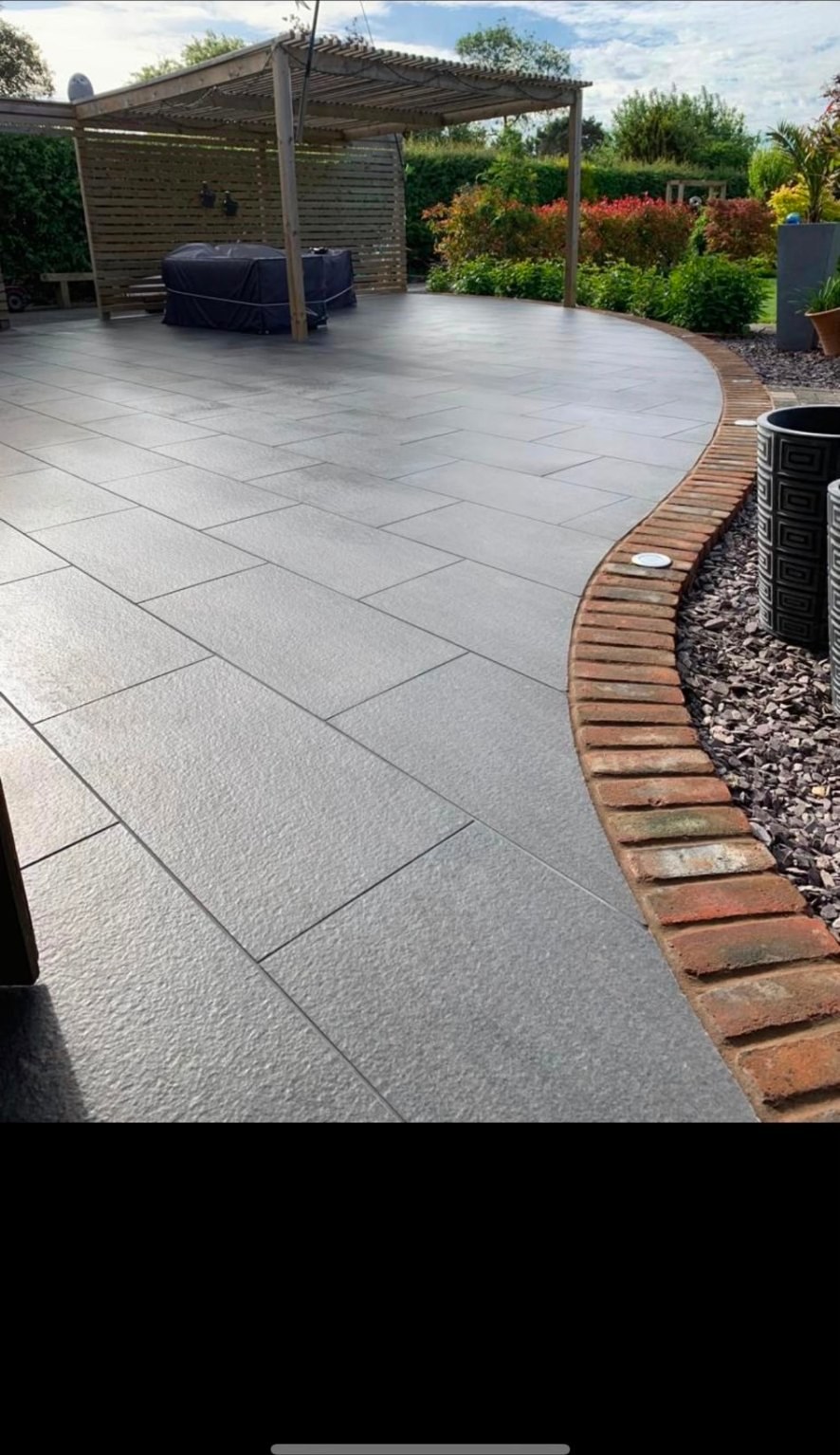
Contemporary grey porcelain patio with a curved brick edge and timber pergola
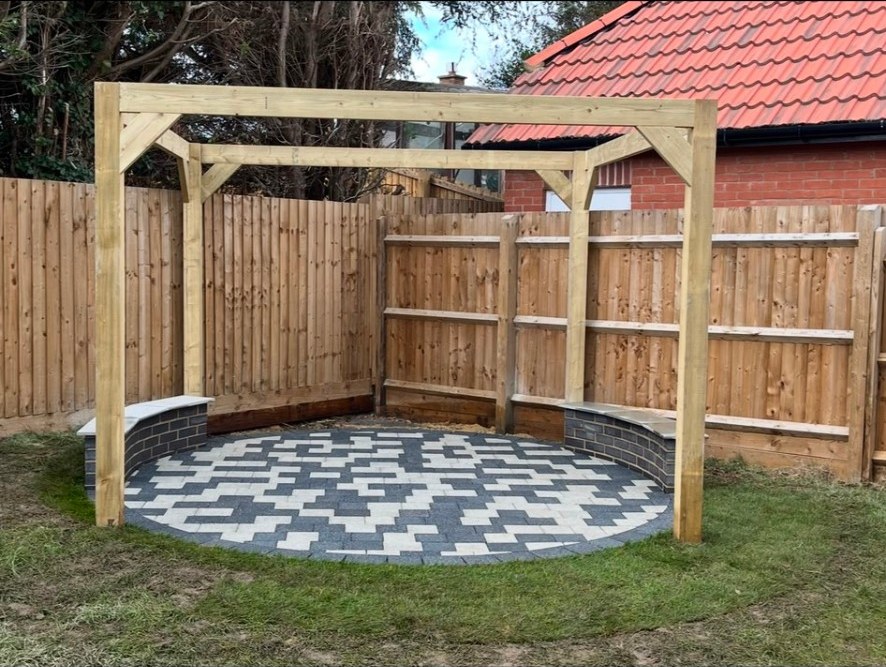
Circular block paving patio with timber pergola, brick seating, and new garden fencing.
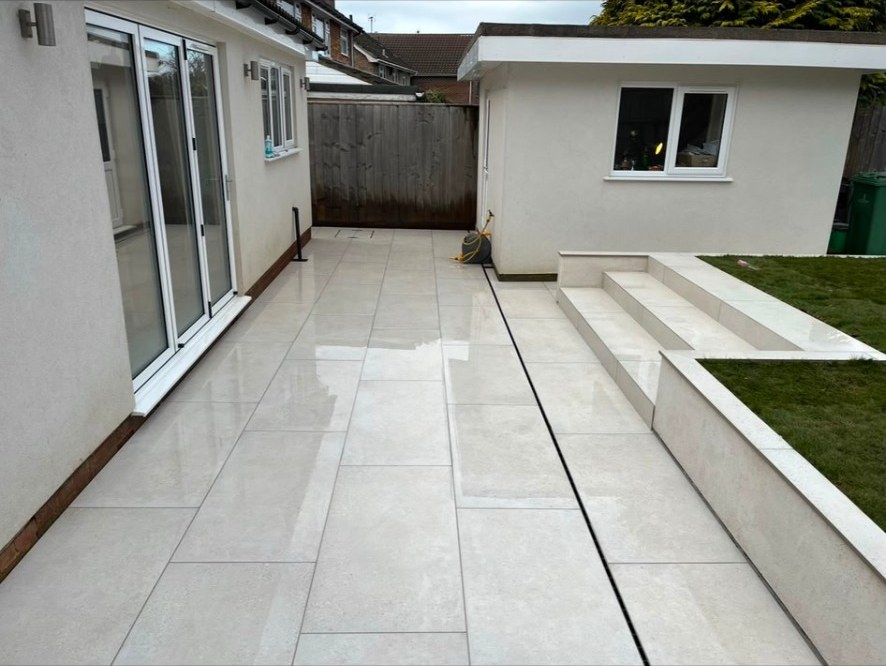
Contemporary light grey porcelain patio with matching steps and integrated drainage

Get a fixed-price quote you can actually trust.

On-site survey, accurate measurements, written specification, itemised pricing and a firm start date. No subcontracted estimators, no pressure, no surprise add-ons mid-build.

Free on-site survey, free written quote

Call NowGet Free Quote