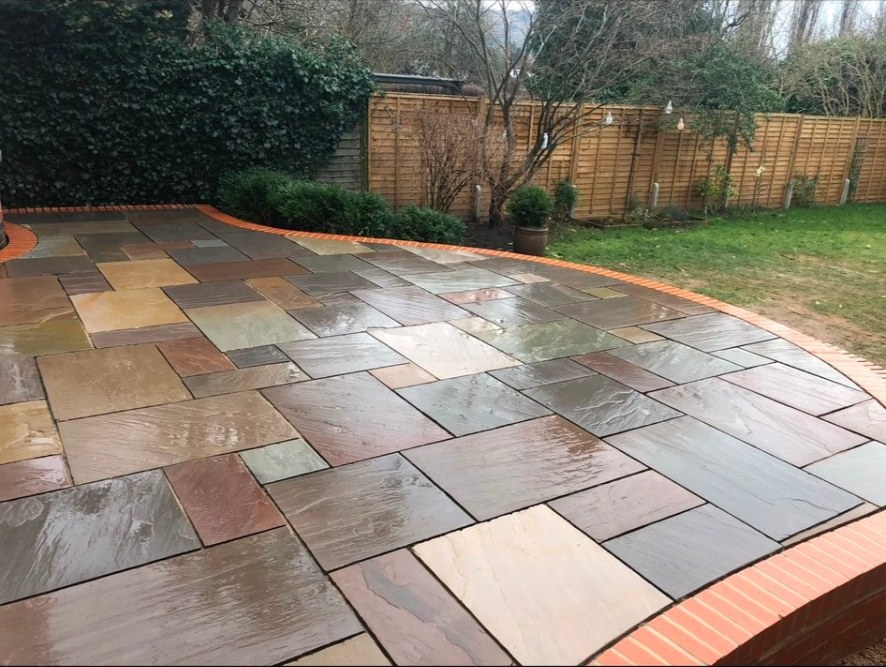
Riven natural stone patio with multi-colour sandstone flags and red brick edging

Natural Stone Paving · Cheltenham & the Cotswolds

Natural Stone PavingCotswold character.Conservation-area compliant.

Cotswold limestone, Yorkstone, Indian sandstone and granite laid on engineered sub-base with the correct mortar chemistry for the stone - lime-based where required for breathability, cement-based where appropriate. The right stone, the right mortar, the right way.

Experienced across Cheltenham, Painswick, Winchcombe and Stow-on-the-Wold conservation areas.

15+
Years experience
400+
Projects completed
5 yr
Workmanship guarantee
Fully insured
Fully insured
Free
Response time

Overview

What natural stone paving actually involves - and when it's the right call.

What it is

Natural stone paving is quarried sedimentary or igneous stone (limestone, sandstone, granite, slate) cut into pavers of varying calibrated or riven thickness, laid on a bedded mortar over a granular sub-base. Each stone type has distinct properties - porosity, hardness, frost tolerance, mortar chemistry - and demands installation appropriate to those properties.

Who it's for

Owners of period properties, listed buildings, Cotswold cottages and homes in conservation areas where stone authenticity matters. Equally suited to contemporary builds wanting a tactile, characterful patio that improves with patina rather than wearing out.

When it's needed

When concrete or porcelain would feel wrong for the architectural context, when restoring an original stone patio that has failed, or when planning officers require natural stone for a conservation-area application.

Why professional installation matters

Natural stone is unforgiving of incorrect mortar chemistry. Cement-based mortar on a soft, breathable limestone traps moisture, causes spalling, and can void listed-building consent. Lime-based mortar on a non-breathable granite is pointless. Professional installation means matching mortar to stone, not using a single bag of pointing compound across every job.

The cost of getting it wrong

What happens when this job is delayed - or done badly.

Natural stone failures are almost always chemical, not structural. The right stone laid on a sound sub-base will outlive the building - but laid with the wrong mortar or sealant, it can spall, delaminate or stain within a single winter. Three failure modes account for nearly every natural-stone rescue we attend.

Spalling and flake-loss on limestone

Cement-based pointing on Cotswold limestone traps moisture inside the stone. Freeze-thaw expansion blows the face off the stone in flakes, often within one or two winters. Almost always irreversible.

Picture-framing and salt bloom

Cementitious mortar leaches free lime to the surface, leaving a permanent white 'shadow' around every stone. Common on Indian sandstone where installers used standard pointing mortar.

Movement at the joint

Natural stone is dimensionally inconsistent - joints can vary 5–15mm. Without flexible jointing, freeze-thaw movement cracks rigid mortar within two years. Brush-in resin joints or lime mortar are the only correct choices.

Common mistakes we see on rescue jobs

  • Using cement-based 4:1 pointing on Cotswold limestone - the single biggest cause of spalling in conservation-area patios.
  • Sealing limestone with a non-breathable sealant - traps moisture, accelerates failure.
  • Mixing stone types and finishes without sample-laying first - colour clashes that can't be undone.
  • Laying riven (uneven thickness) stone on a fixed-depth bedding - guaranteed lippage.
  • Using sandstone in a frost pocket without checking its absorption rating - frost damage within one winter.
  • Skipping breathable membranes against retaining walls and watching efflorescence emerge through the stone face.

The Millpond Process

A defined, documented process from first visit to handover.

  1. 01

    Stone selection

    Sample stones brought on site, viewed wet and dry, in morning and evening light. Sourcing direct from quarry agents - full provenance, traceable supply.

  2. 02

    Sub-base

    150–200mm MOT Type 1 in 75mm layers, fully compacted. Edge restraint installed before laying.

  3. 03

    Bedding

    30–50mm full-bed mortar - chemistry chosen to suit stone (lime-based for breathable stone, cement-based for granite and dense sandstone).

  4. 04

    Laying & cutting

    Each stone hand-selected for colour balance and thickness. Wet-cut on site, edges fettled, joints kept consistent within the stone's tolerance.

  5. 05

    Jointing & curing

    Lime mortar or compatible brush-in resin jointing, applied at the right ambient conditions and protected from rain and frost during cure.

What you actually get

Specific, measurable outcomes - not promises.

Authentic conservation-area finish

Cotswold limestone meets local planning officer requirements in Cheltenham, Painswick, Stow and surrounding villages - no rejected applications.

Improves with age

Unlike concrete and porcelain, natural stone develops patina - mosses, lichens, weathering - that increases visual depth and authenticity.

Genuinely unique surface

No two stones are identical. Every patio is one-of-one - not catalogue-replicated.

Repairable indefinitely

Individual stones lift and replace; matched stone is sourced from the same quarry years later - unlike discontinued porcelain ranges.

Listed-building consent friendly

Lime-mortared natural stone is the default expectation of listed building consent officers - no resistance, no objections.

Property-saleable in a conservation context

Estate agents specialising in Cotswold property identify natural stone patios as a positive valuation factor - particularly on period properties.

Materials, methods & variations

Everything you should know before commissioning the work.

Natural stone is not a single product - it is a family of materials with very different properties, each demanding specific installation. The blocks below cover the stones we work with most often and where each is appropriate.

Cotswold limestone

Soft, breathable, porous (8–12% water absorption). Beautiful honey colour, regional authenticity, weathers gracefully. Demands lime mortar (NHL 3.5 typical) - never cement. Best for low-traffic patios, paths and conservation-area projects. Not suitable for vehicle areas.

Yorkshire stone (Yorkstone)

Hard sandstone, low porosity (1–3%), excellent frost tolerance and load-bearing capacity. Suitable for patios, paths and pedestrian commercial areas. Cement or lime mortar both acceptable depending on context. Premium price reflects quarrying limits.

Indian sandstone

Wide tonal range (mint, kandla grey, raj green, modak), affordable, widely available in calibrated 22mm thickness. Frost-rated grades are essential - non-frost-rated 'budget' stone will fail in one winter. Compatible with cement-based mortar and resin jointing.

Granite setts and pavers

Hardest natural stone for paving (Mohs 6–7), near-zero absorption, indestructible. Used for driveway setts, drainage channels, contrast banding and high-traffic commercial. Cement-based bedding standard.

Slate paving

Riven or honed, distinctive colour (greens, purples, blue-blacks). Lower load-bearing capacity than granite; ideal for patios and paths, not driveways. Layering can delaminate if sub-base is wet - drainage critical.

Mortar chemistry by stone type

Soft, breathable stones (Cotswold limestone, soft sandstones): NHL 3.5 hydraulic lime mortar, no cement. Medium stones (Yorkstone, hard sandstone, Indian sandstone): cement-modified or lime, by spec. Hard stones (granite, slate): cement mortar acceptable. Using cement on soft stone is the single most common - and irreversible - installation error in the region.

Questions answered

The questions homeowners actually ask before they book.

Still unsure? Call 07834 619294 and speak with the team direct - no call centre, no scripts.

How much does natural stone paving cost in the Cotswolds?+

Every patio is priced individually based on size, materials, ground conditions and access. We provide a fixed written quote after a free on-site survey.

Will my patio go green and slippery?+

Natural stone holds some moisture and can develop moss or algae in shaded north-facing positions. A light annual pressure-wash and correct falls (1:80 minimum) keep it manageable. R11-rated stone selections are available for north-facing patios.

Can I use Cotswold limestone for a driveway?+

No - limestone is too soft for vehicle loading. For driveways with a Cotswold aesthetic, we use Cotswold-stone-clad block paving, Cotswold-coloured resin bound, or granite setts in honey tones. Limestone is for patios, paths and pedestrian areas only.

Do I need planning permission for natural stone paving?+

In conservation areas and on listed buildings, often yes for replacement or new patios. We handle the application and pre-application advice with the local conservation officer as part of the quote.

How do I clean natural stone paving?+

Annual pressure-wash on a low setting (1500–2000 PSI) - never higher, which damages soft stones. No bleach, no acid cleaners on limestone (causes immediate damage). Stone-specific cleaners for stubborn marks. Care guide provided at handover.

Should I seal it?+

Cotswold limestone - no. Sealants trap moisture and accelerate decay. Indian sandstone - optional; a breathable colour-enhancer sealer can deepen the colour and reduce staining for 2–3 years. Granite and slate - usually unnecessary.

Will it match my existing stonework?+

Where you have existing Cotswold limestone walls or features, we source from the same regional quarries to match tonal range as closely as possible. Perfect colour match is impossible (each batch varies), but blend-acceptable matches are routine.

How long does installation take?+

A 30–50m² stone patio is typically 7–10 working days - slower than porcelain or block due to hand-selection and the slower cure of lime mortars where used.

What's the guarantee?+

5 years on workmanship (sub-base, bedding, jointing, falls). Stone itself is rated for 50+ years in the correct application; provenance documentation supplied at handover.

A preview of our work

Recent projects across the Cotswolds.

View full portfolio
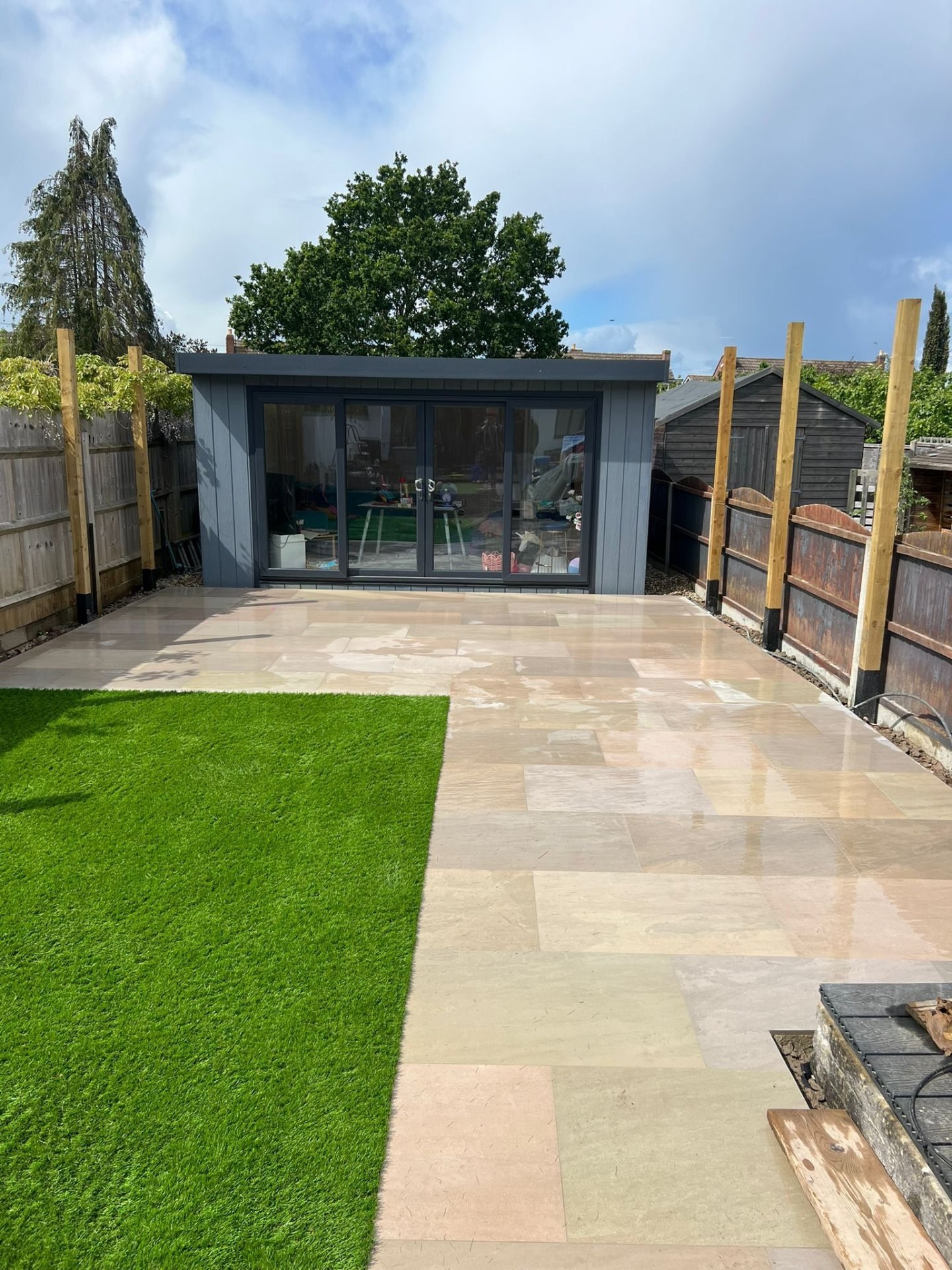
Modern garden landscape with sandstone patio flags, artificial grass, and grey summerhouse.
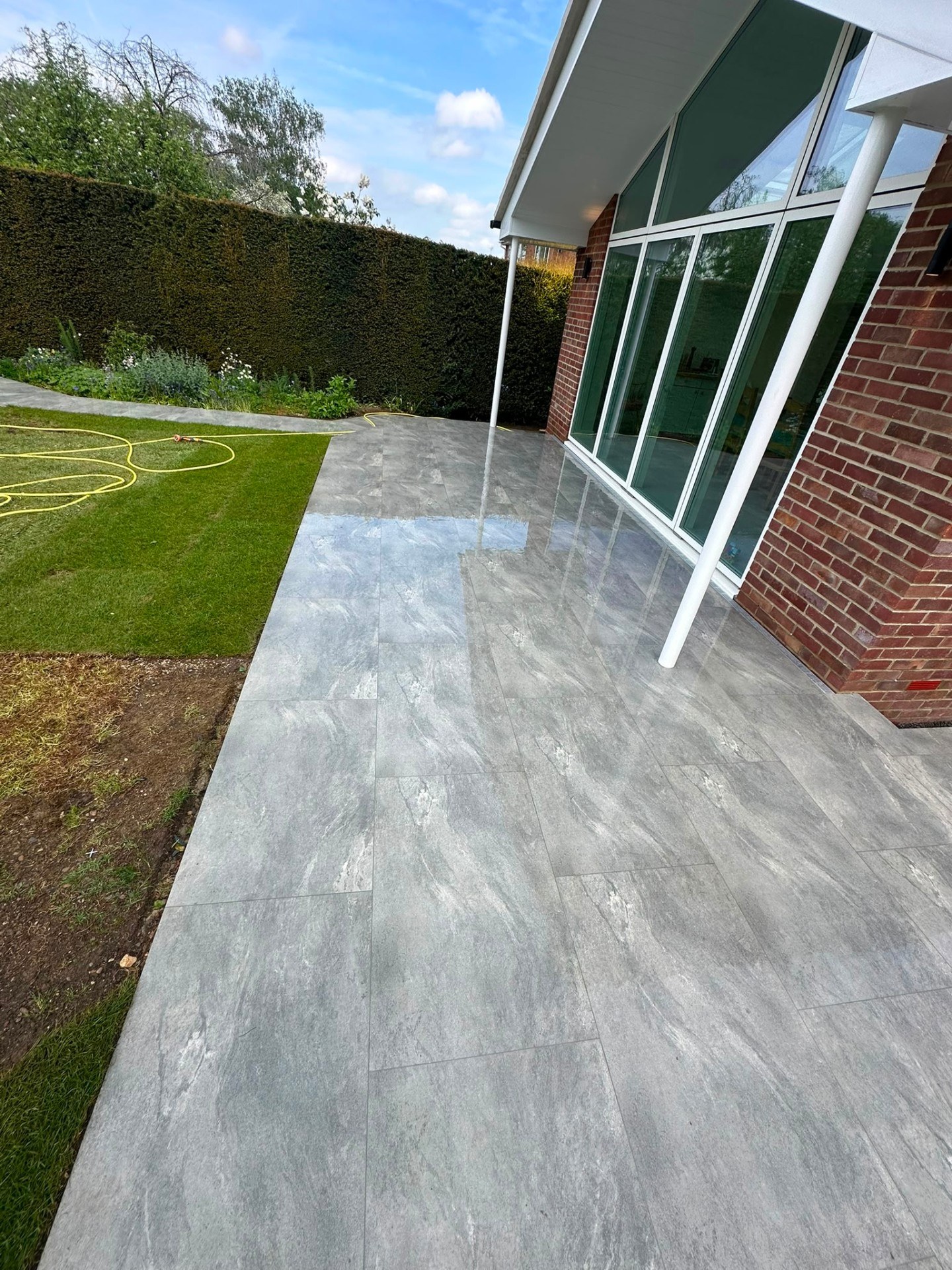
Modern grey porcelain patio paving alongside a fresh lawn and house extension.
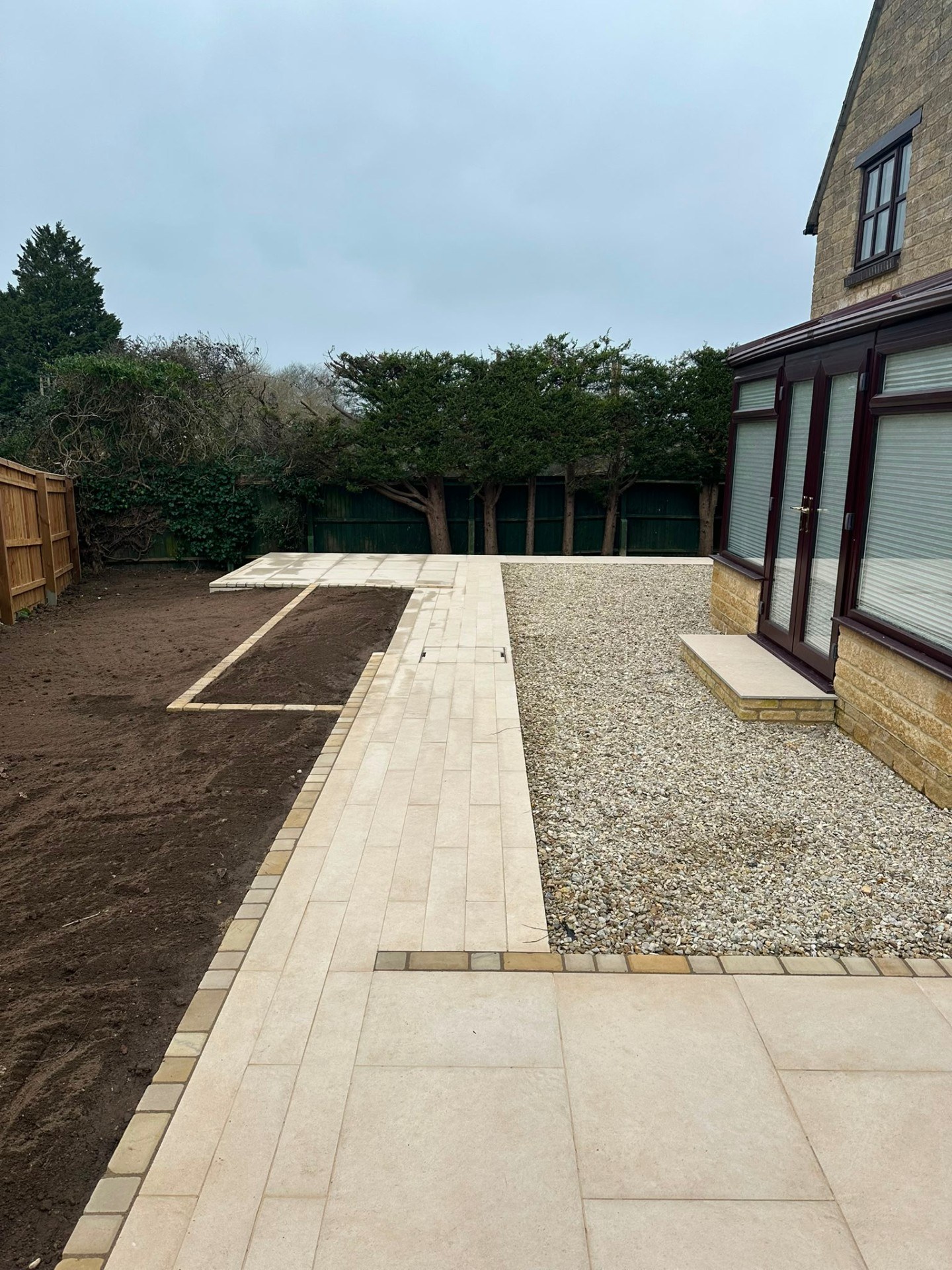
Modern garden landscaping with light porcelain paving, decorative gravel, and new flower beds.
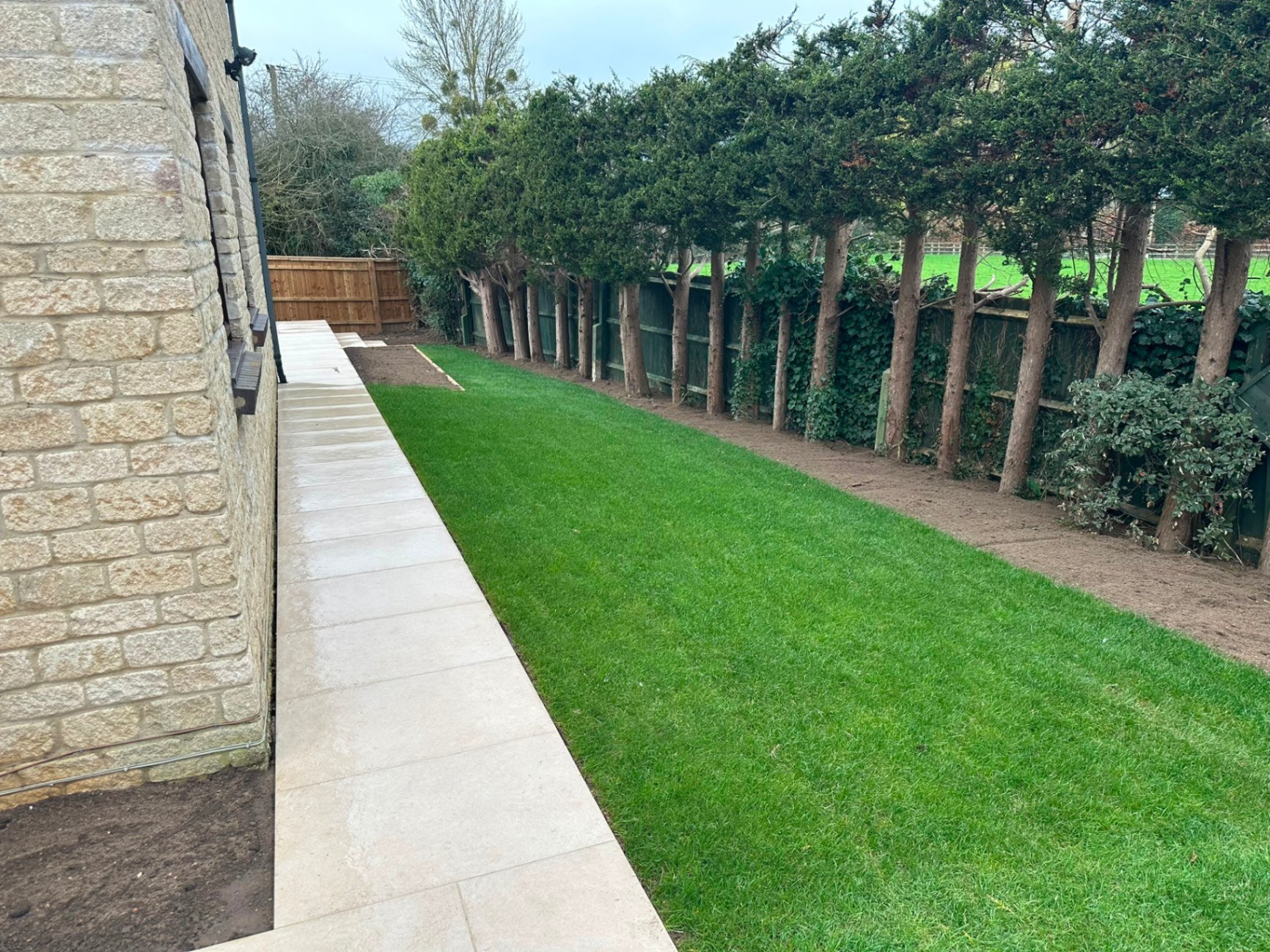
Newly turfed lawn with a smooth porcelain tile garden path alongside a stone house.
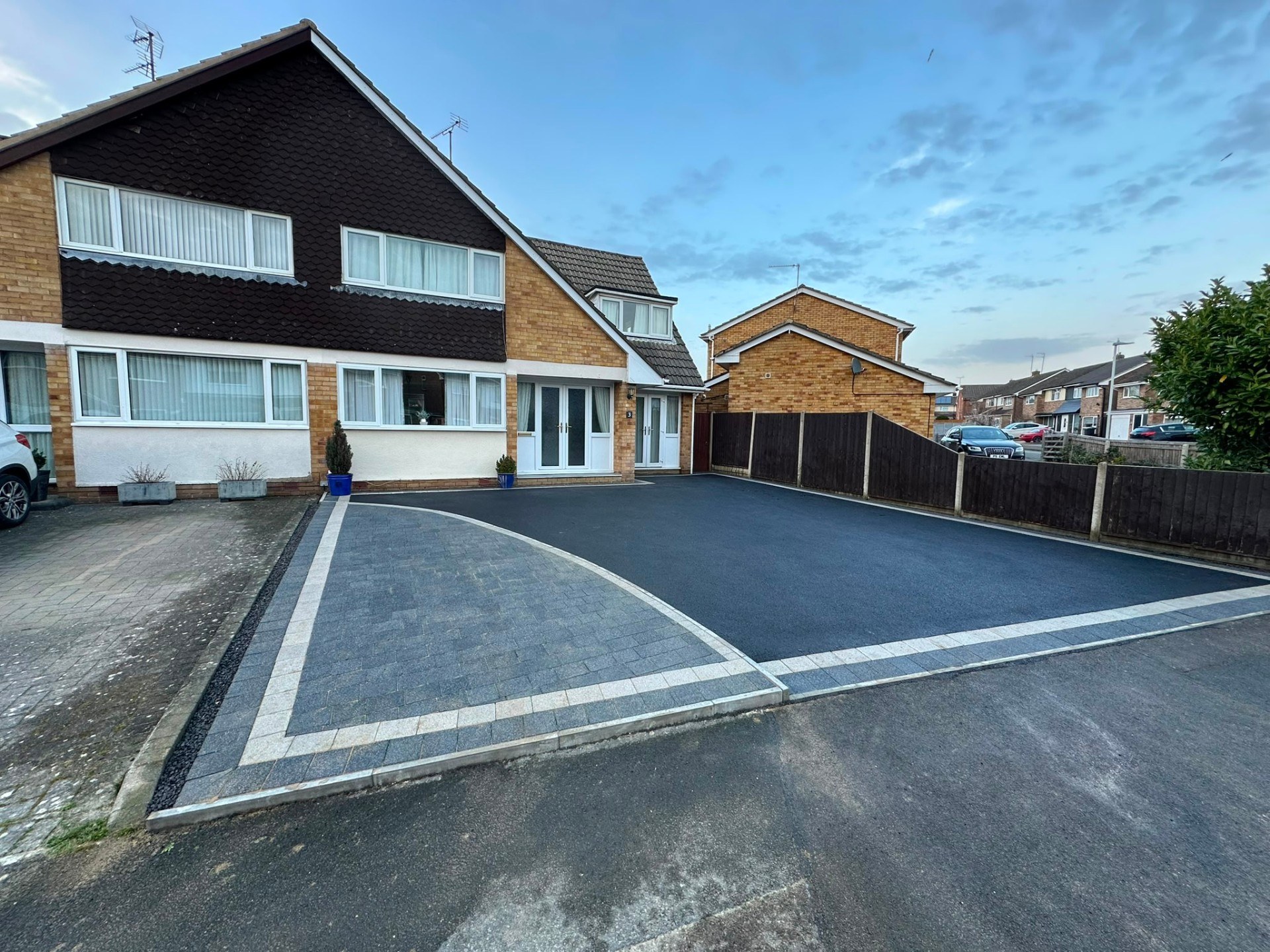
Large dark grey asphalt driveway with block paved border and apron detail in front of a house.
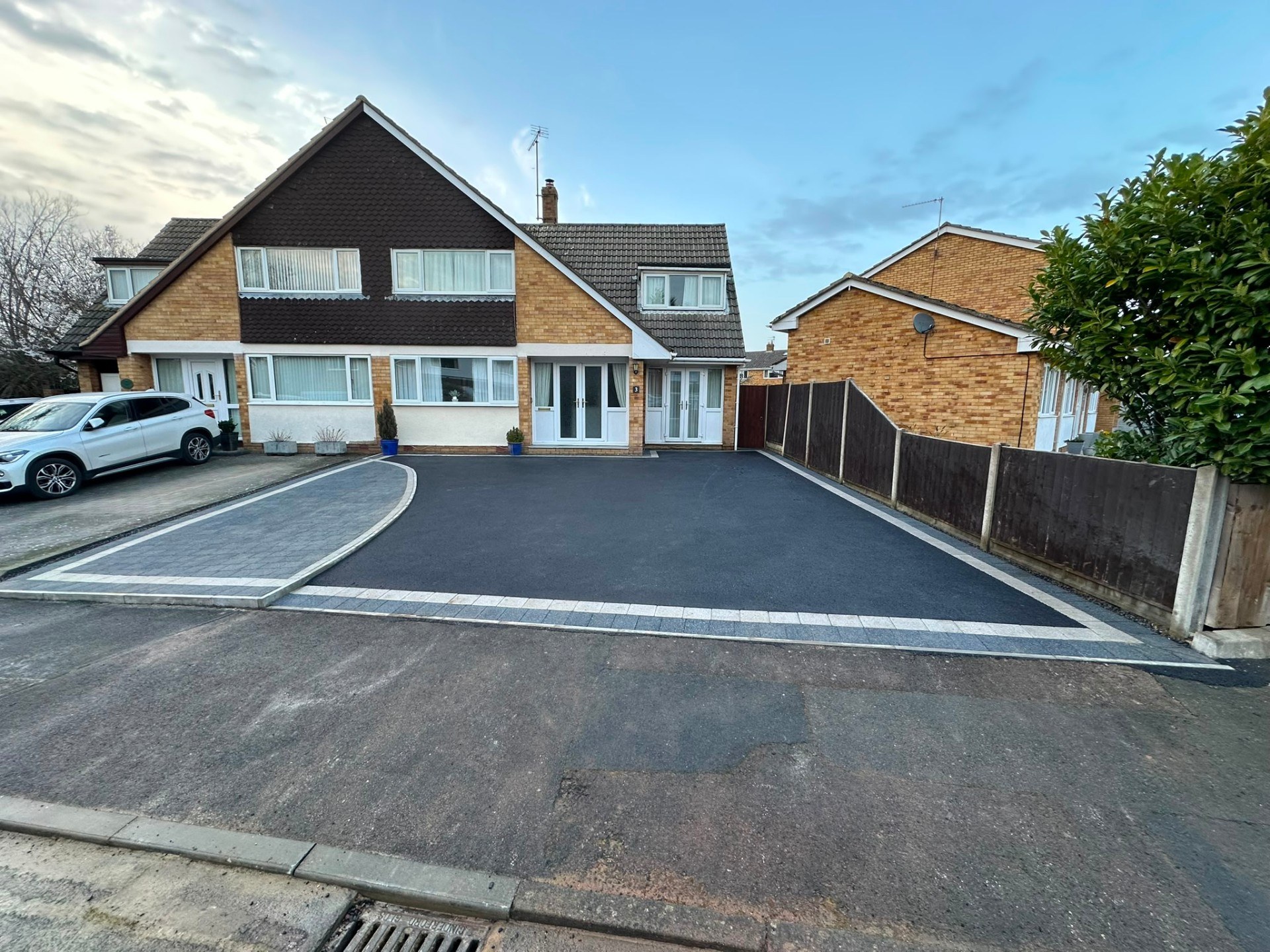
Modern tarmac driveway with decorative block-paving border and matching curved parking bay.
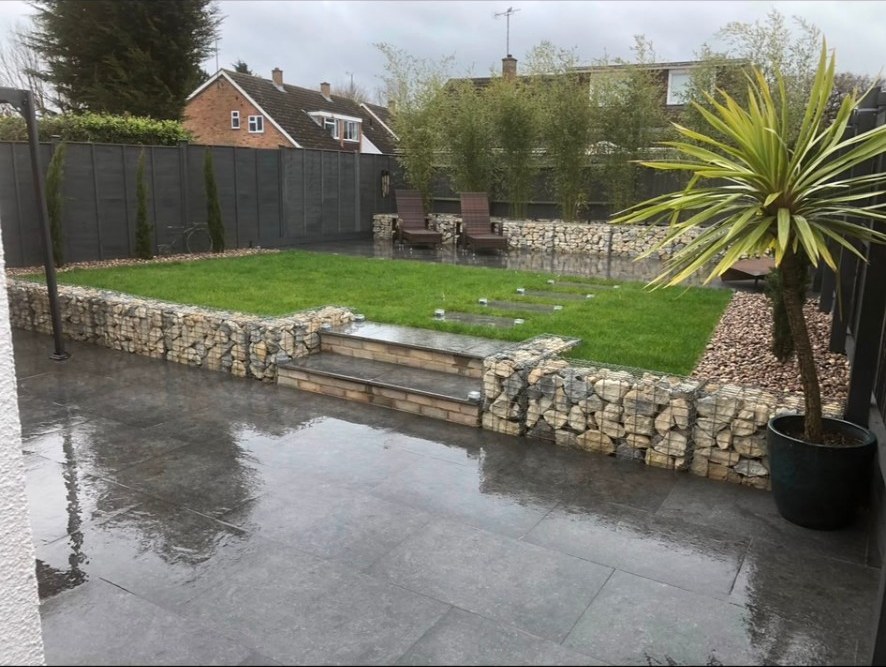
Contemporary garden with grey porcelain patio, gabion stone walls, lawn and bamboo screening.
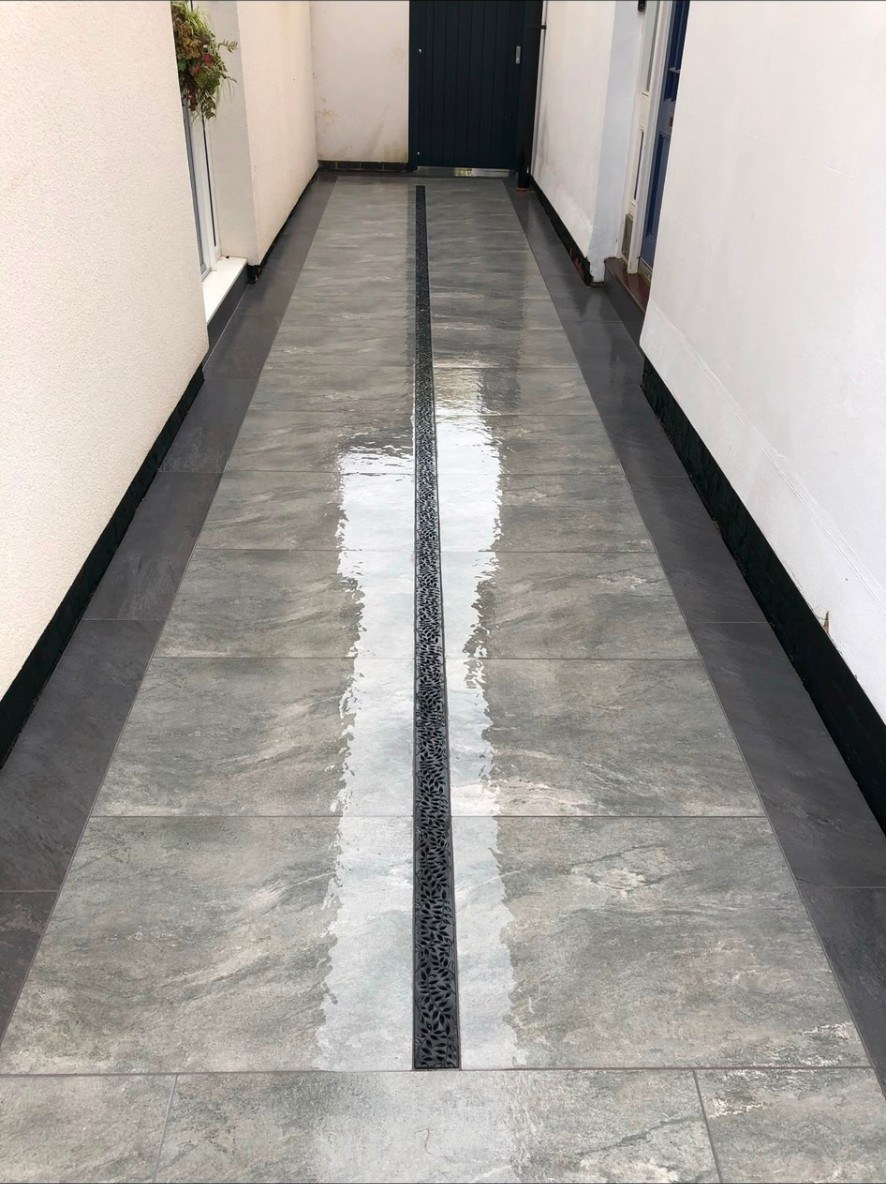
Contemporary grey porcelain paving path with central decorative drainage channel in a side return
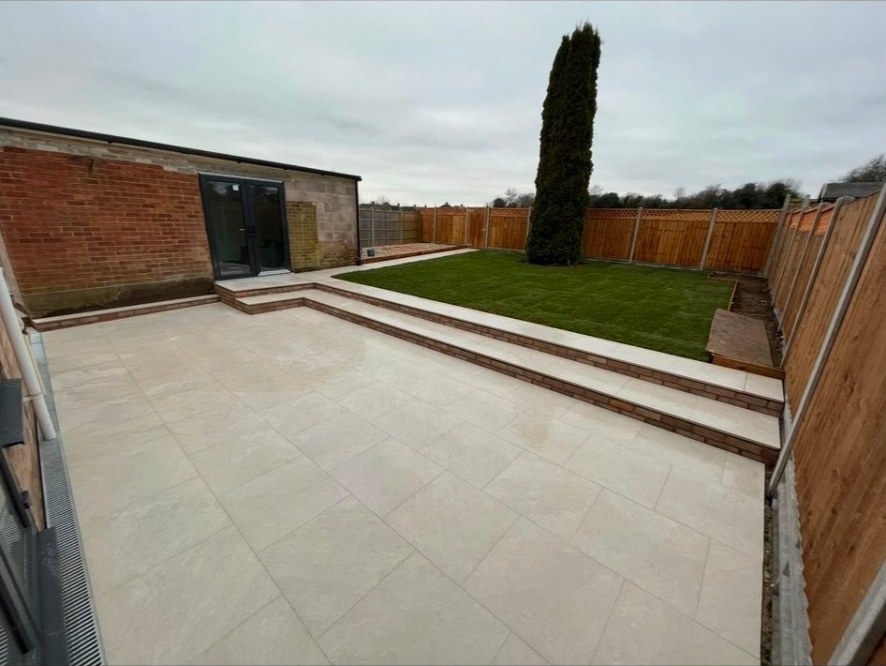
Modern garden with porcelain patio, tiered steps, freshly laid lawn and timber fencing.
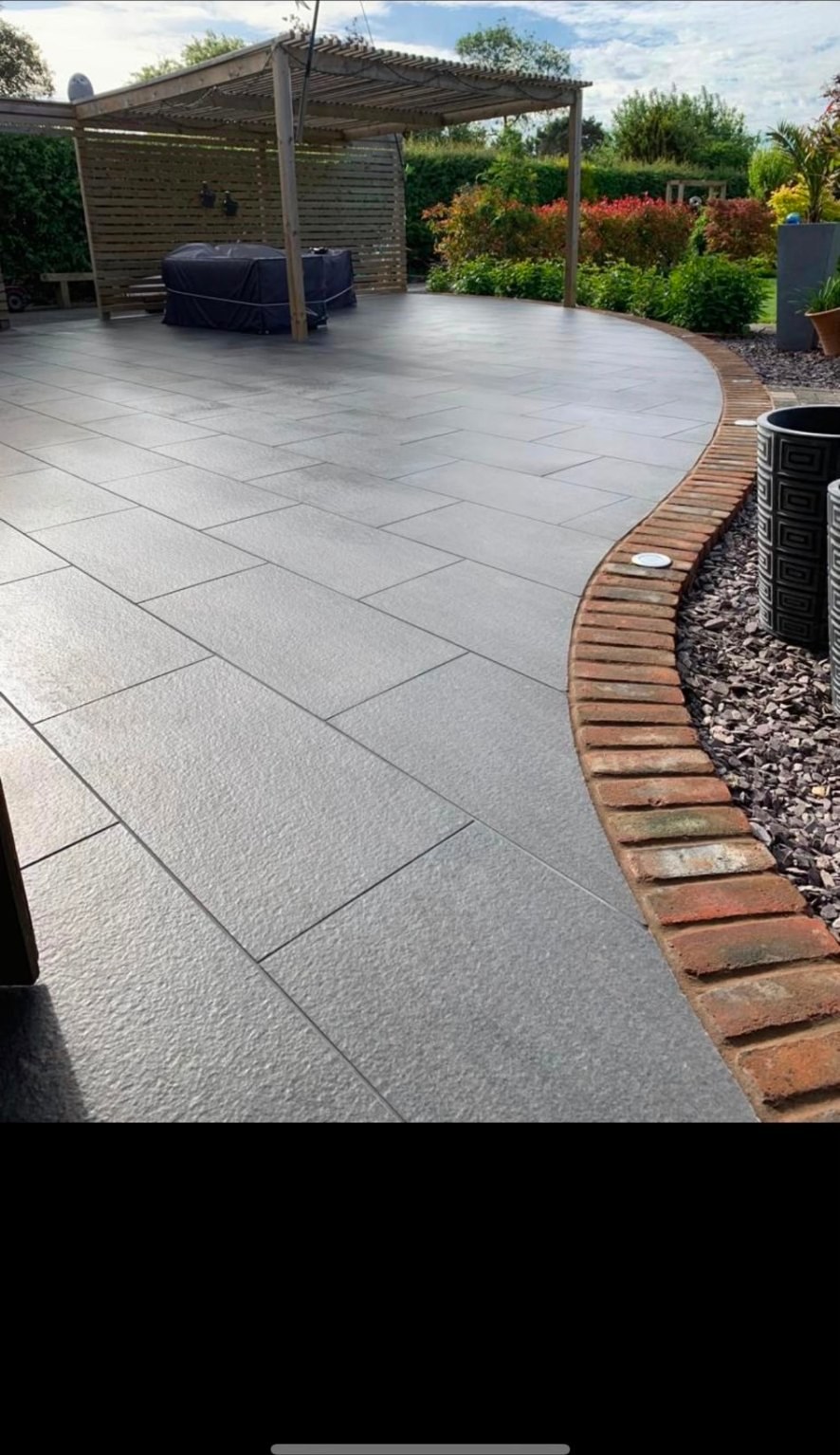
Contemporary grey porcelain patio with a curved brick edge and timber pergola
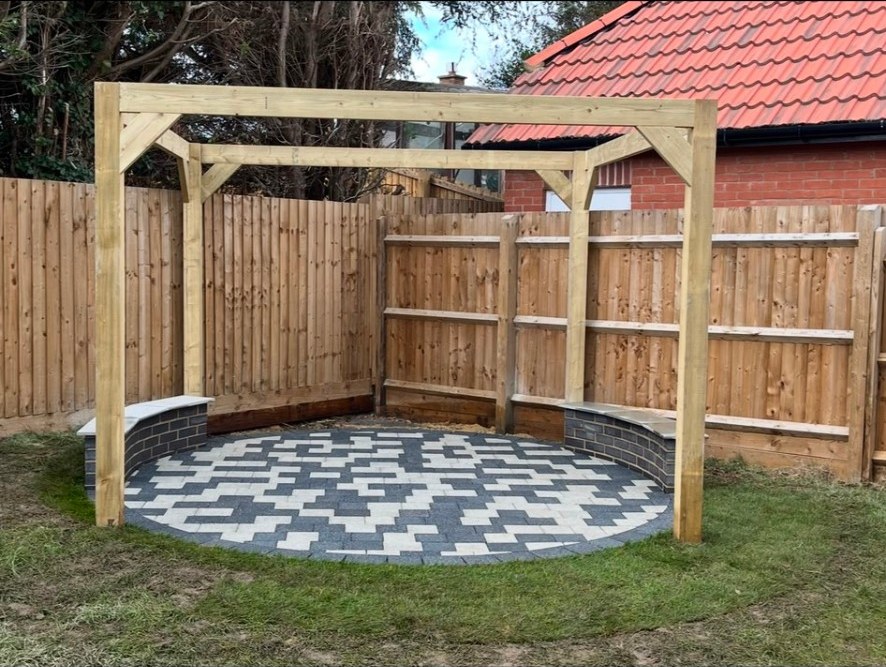
Circular block paving patio with timber pergola, brick seating, and new garden fencing.
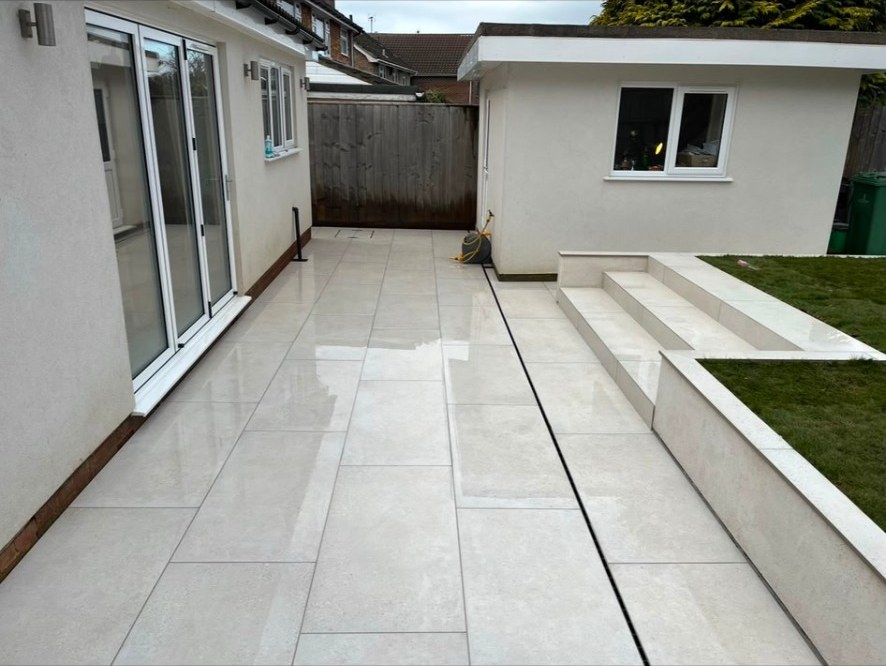
Contemporary light grey porcelain patio with matching steps and integrated drainage

Get a fixed-price quote you can actually trust.

On-site survey, accurate measurements, written specification, itemised pricing and a firm start date. No subcontracted estimators, no pressure, no surprise add-ons mid-build.

Free on-site survey, free written quote

Call NowGet Free Quote