Modern grey porcelain patio paving alongside a fresh lawn and house extension.

Porcelain Paving · Cheltenham & the Cotswolds

Porcelain Paving in CheltenhamFrost-proof. Stain-proof.Built for British weather.

20mm vitrified porcelain laid on engineered MOT Type 1 sub-base, full-bed mortar and slurry-primed for permanent bond. No movement, no efflorescence, no annual reseal. The patio you buy is the patio you have in twenty years.

Premium porcelain patios installed across Gloucestershire and the Cotswolds.

15+
Years experience
400+
Projects completed
5 yr
Workmanship guarantee
Fully insured
Fully insured
Free
Response time

Overview

What porcelain paving actually involves - and when it's the right call.

What it is

Porcelain paving is fired-clay tile manufactured at 1200°C+ to vitrification, producing a 20mm-thick external paver with near-zero water absorption (<0.5%), R11 anti-slip rating and a Mohs hardness around 7. It is the highest-performance surface available for residential and commercial patios - and the most demanding to lay correctly.

Who it's for

Homeowners wanting a long-life, low-maintenance patio that resists wine, oil, rust, mortar and frost without sealing. Particularly suited to north-facing or shaded Cotswold gardens prone to moss and algae on traditional stone, and properties with contemporary or transitional architecture.

When it's needed

Replacing a sinking or stained Indian sandstone patio, installing the first patio after an extension, or specifying a low-maintenance surface for a holiday let, rental or second home where annual sealing isn't realistic.

Why professional installation matters

Porcelain is unforgiving. Every flaw in the sub-base or bedding telegraphs through the finished surface within 12 months. The slurry primer must be applied at the correct dilution and within the open time; falls must be exact (minimum 1:80); cuts must be wet-cut and edge-detailed. The material costs the same whether laid well or badly - only professional installation justifies the investment.

The cost of getting it wrong

What happens when this job is delayed - or done badly.

Porcelain has the lowest tolerance for poor installation of any patio material. A 1mm bedding inconsistency that wouldn't show on Indian sandstone shows immediately on a 600x600 porcelain plank. Failure modes are visible, expensive and almost always traceable to one of three corners cut at install.

Hollow-sounding, debonded slabs

Without slurry primer (SBR or equivalent) applied to the underside of each slab and full-bed mortar contact, water tracks under the slab, freezes, and lifts the bond. Detected by tapping - and uneconomic to repair without lifting the whole area.

Lippage and visible bedding lines

Porcelain's machined edges show every height difference over 1mm. Inconsistent mortar depth or rushed laying leaves trip-hazard lippage and uneven shadows in low sun - the patio that 'looks wrong but you can't say why'.

Stained, picture-framed joints

Wrong jointing compound (cementitious slurry used on porcelain instead of resin-based brush-in) stains the surface permanently. The 'shadow' around each slab is the giveaway.

Common mistakes we see on rescue jobs

  • Laying porcelain on a 'spot-and-dab' five-blob method instead of full-bed mortar - the single most common cause of debonding.
  • Skipping the slurry primer on the underside of each slab to save 15 minutes per square metre.
  • Using a standard cementitious pointing mortar instead of a porcelain-safe resin jointing compound.
  • Cutting porcelain dry with a disc cutter - chipped edges and inhalation-rated silica dust.
  • Insufficient sub-base depth (under 150mm MOT Type 1 for foot traffic; under 200mm for any vehicle access).
  • Insufficient fall - anything under 1:80 will pool and stain.

The Millpond Process

A defined, documented process from first visit to handover.

  1. 01

    Specification

    Material selection (size, finish, slip rating), fall design, edge detail and jointing compound chosen and confirmed in writing before order.

  2. 02

    Excavation & sub-base

    Dig to 200mm minimum below finished level. MOT Type 1 laid in 75mm layers, each whacker-compacted to refusal. Edge restraint installed.

  3. 03

    Bedding & priming

    30–40mm full-bed mortar laid wet. Each slab slurry-primed on the underside immediately before laying. No spot-and-dab, ever.

  4. 04

    Laying & cutting

    Slabs laid to string lines, levels checked every row, joints kept consistent (typically 3–5mm). All cuts wet-cut with diamond blade, edges fettled.

  5. 05

    Jointing & sealing

    Resin-based brush-in jointing compound applied per manufacturer spec. Surface cleaned, photographed, and handed over with care guide and guarantee.

What you actually get

Specific, measurable outcomes - not promises.

Zero annual maintenance

No sealing, no re-jointing, no scrubbing. Pressure-wash once a year if you want it. That's it.

Stain-proof in real conditions

Wine, BBQ grease, leaf tannin, rust from garden furniture, mortar splash - all wipe off porcelain that wouldn't wipe off sandstone.

Frost-rated for Cotswold winters

Water absorption under 0.5% means no freeze-thaw damage. Concrete and natural stone absorb 4–10x more.

R11 anti-slip when wet

Textured porcelain meets pendulum test requirements for slip resistance - safer than wet limestone or polished sandstone.

Colour-stable for 25+ years

Pigment is fused at vitrification, not painted on. Will not fade, yellow or chalk in UV.

Property-saleable surface

Estate agents in Cheltenham consistently identify porcelain patios as a positive in valuations - sandstone or concrete rarely the same.

Materials, methods & variations

Everything you should know before commissioning the work.

Porcelain is a specification-led product. The cost difference between a 5-year and a 25-year porcelain patio is not the material - it is the sub-base depth, the bedding method, the primer, the jointing compound and the falls. The blocks below cover each in turn.

Tile sizes and formats

Common formats are 600x600 (square), 600x900 (plank), 800x800 (large square) and 1200x600 (large plank). Larger formats look contemporary but demand a perfectly true sub-base - any deviation is amplified. Plank formats are excellent for narrow side-returns and pool surrounds.

Finishes and slip ratings

Most external porcelain is R11 anti-slip (textured matte). Polished or honed porcelain is interior-only - it becomes lethal when wet. We specify R11 minimum for patios and R12 for pool surrounds, steps and shaded north-facing areas.

Sub-base specification

150mm MOT Type 1 for foot traffic; 200mm for occasional light vehicle (e.g. wheelbarrow access); 250mm with geotextile separation for any car traffic. Laid in 75mm layers, each compacted to refusal with a 250kg+ whacker plate.

Bedding and priming

30–40mm full-bed wet mortar (4:1 sharp sand to cement with plasticiser). Each slab's underside is slurry-primed with an SBR-modified cementitious slurry within open time. This is non-negotiable for porcelain - spot-and-dab voids the manufacturer warranty on every major brand.

Jointing systems

Resin-based brush-in compounds (e.g. Geo-Fix, Easyjoint, Vdw 850+) are the only correct choice for porcelain. They cure flexibly, resist weed growth and frost-heave, and will not stain the surface as cementitious mortars do.

Edge details and steps

Bullnose porcelain edging for raised patios, mitred corners for steps, and matching coping for walls. Edge restraint either concrete haunch or galvanised steel edging - never relying on jointing compound to hold a perimeter slab.

Questions answered

The questions homeowners actually ask before they book.

Still unsure? Call 07834 619294 and speak with the team direct - no call centre, no scripts.

How much does a porcelain patio cost in Cheltenham?+

Every patio is priced individually based on size, materials, ground conditions and access. We provide a fixed written quote after a free on-site survey.

Do I need to seal porcelain paving?+

No. Vitrified porcelain has water absorption under 0.5% - there is nothing for a sealant to penetrate. Avoid any installer who suggests sealing porcelain; it indicates inexperience with the material.

How long does installation take?+

A 30–50m² patio is typically a 5–8 working day install: 2 days groundworks, 3–5 days laying, 1 day jointing and handover. Larger or multi-level patios scale accordingly.

What's the lifespan of porcelain paving?+

The tile itself is rated for 50+ years. With correct sub-base and installation, the patio will outlast the property. The only failure modes are installation-related - which is why specification matters more than brand.

Can you lay porcelain over my existing patio?+

No reputable installer would. Porcelain demands a fresh engineered sub-base. Overlaying onto existing slabs guarantees debonding within two winters. Existing patio is excavated and disposed of as part of the quote.

Will the colour fade?+

No. Porcelain pigment is fused at vitrification (1200°C+). It will not fade, yellow or chalk in UV. Manufacturer colour warranty is typically 25 years.

Is porcelain slippery when wet?+

Correctly specified R11-rated external porcelain is less slippery than polished limestone or sandstone when wet. We specify R11 minimum for all patio installs and R12 for pool surrounds and steps.

Do you offer a guarantee?+

Yes - 5 years on workmanship (sub-base, bedding, jointing, falls). Manufacturer warranty on the tile itself (typically 10–25 years). Single point of contact for both.

What about during a Cotswold winter?+

Porcelain is frost-rated to -50°C and has water absorption under 0.5%. There is no freeze-thaw failure mode - provided sub-base drainage is correct, which is built into every Millpond install.

A preview of our work

Recent projects across the Cotswolds.

View full portfolio
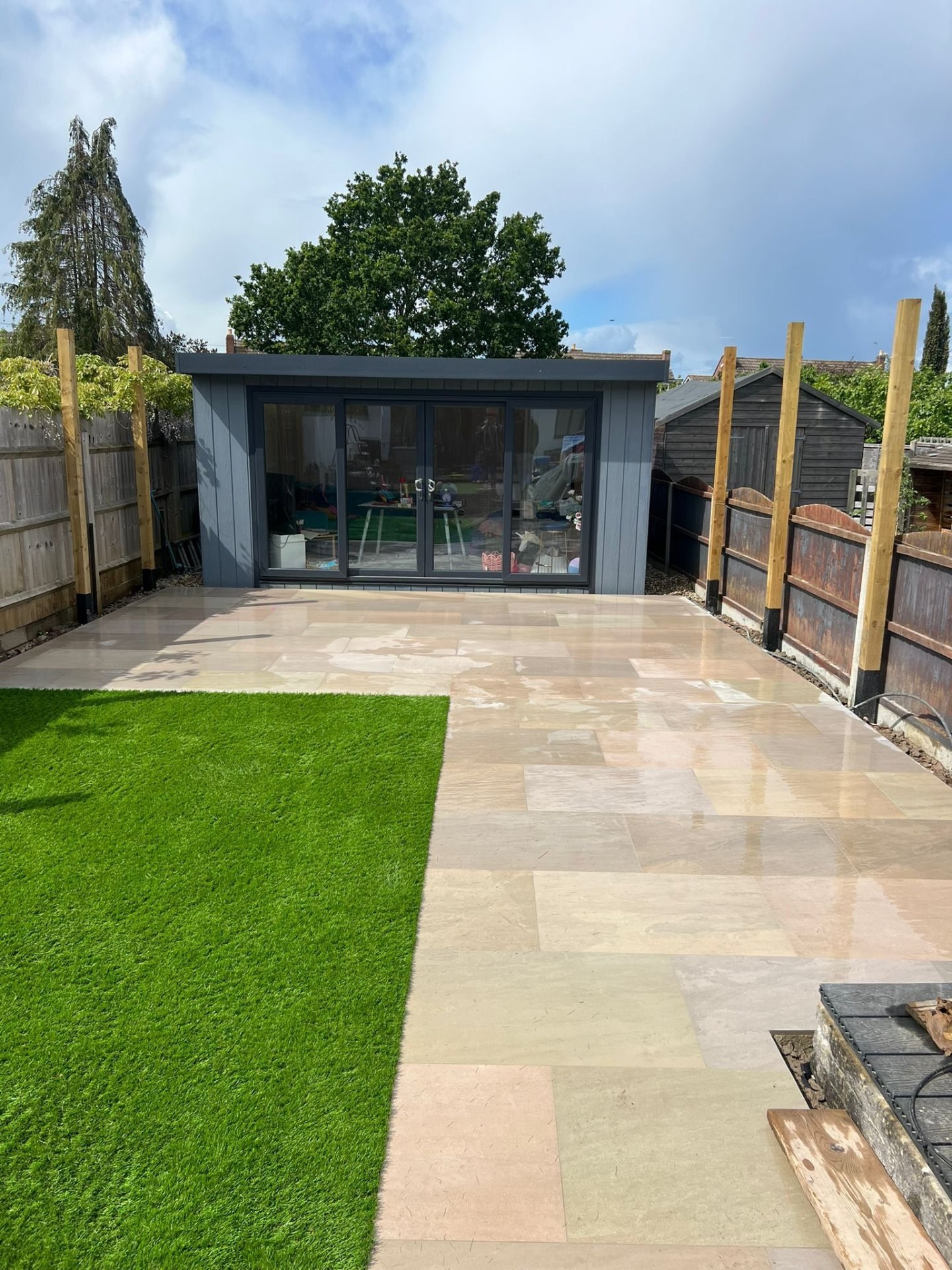
Modern garden landscape with sandstone patio flags, artificial grass, and grey summerhouse.
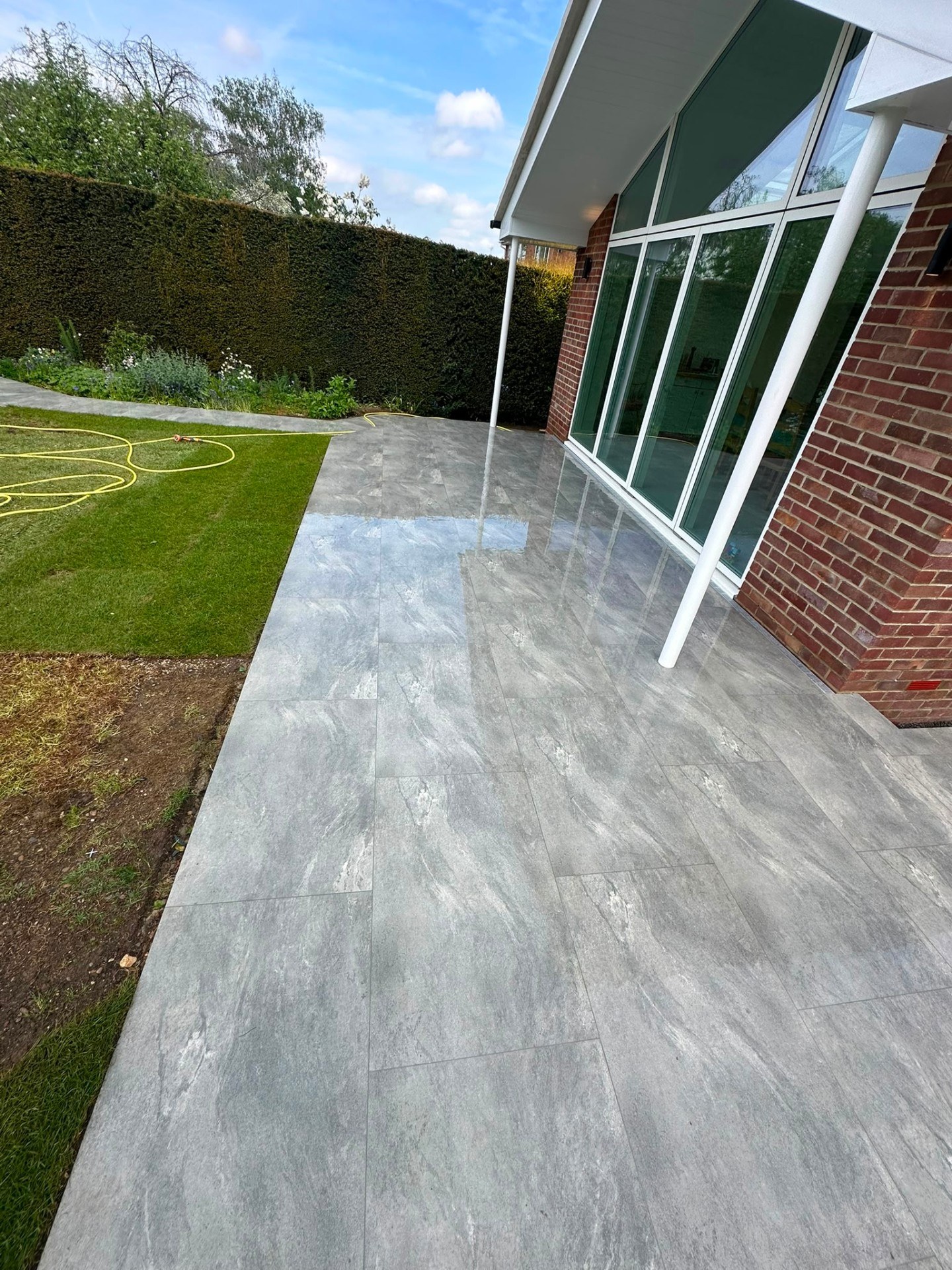
Modern grey porcelain patio paving alongside a fresh lawn and house extension.
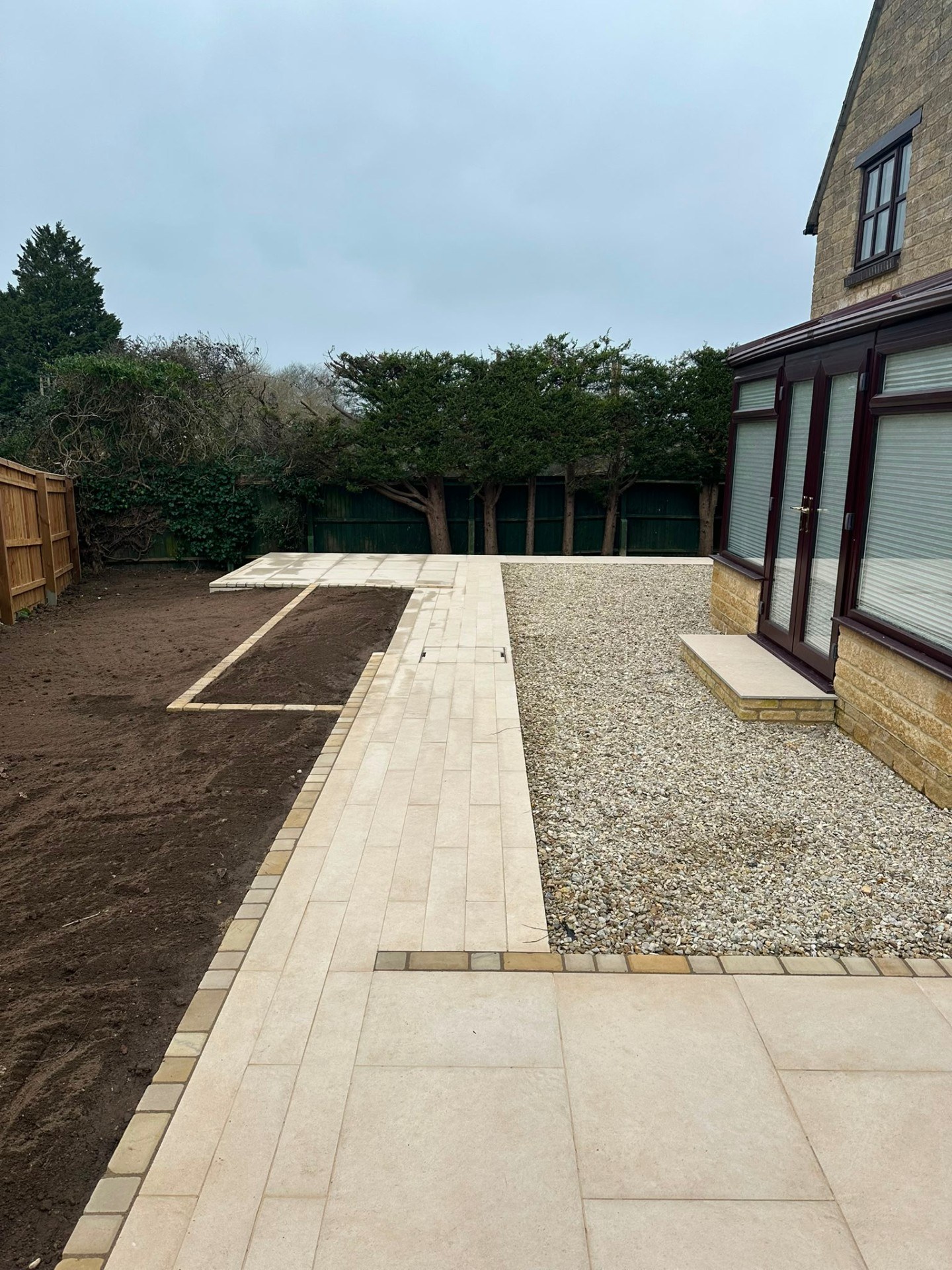
Modern garden landscaping with light porcelain paving, decorative gravel, and new flower beds.
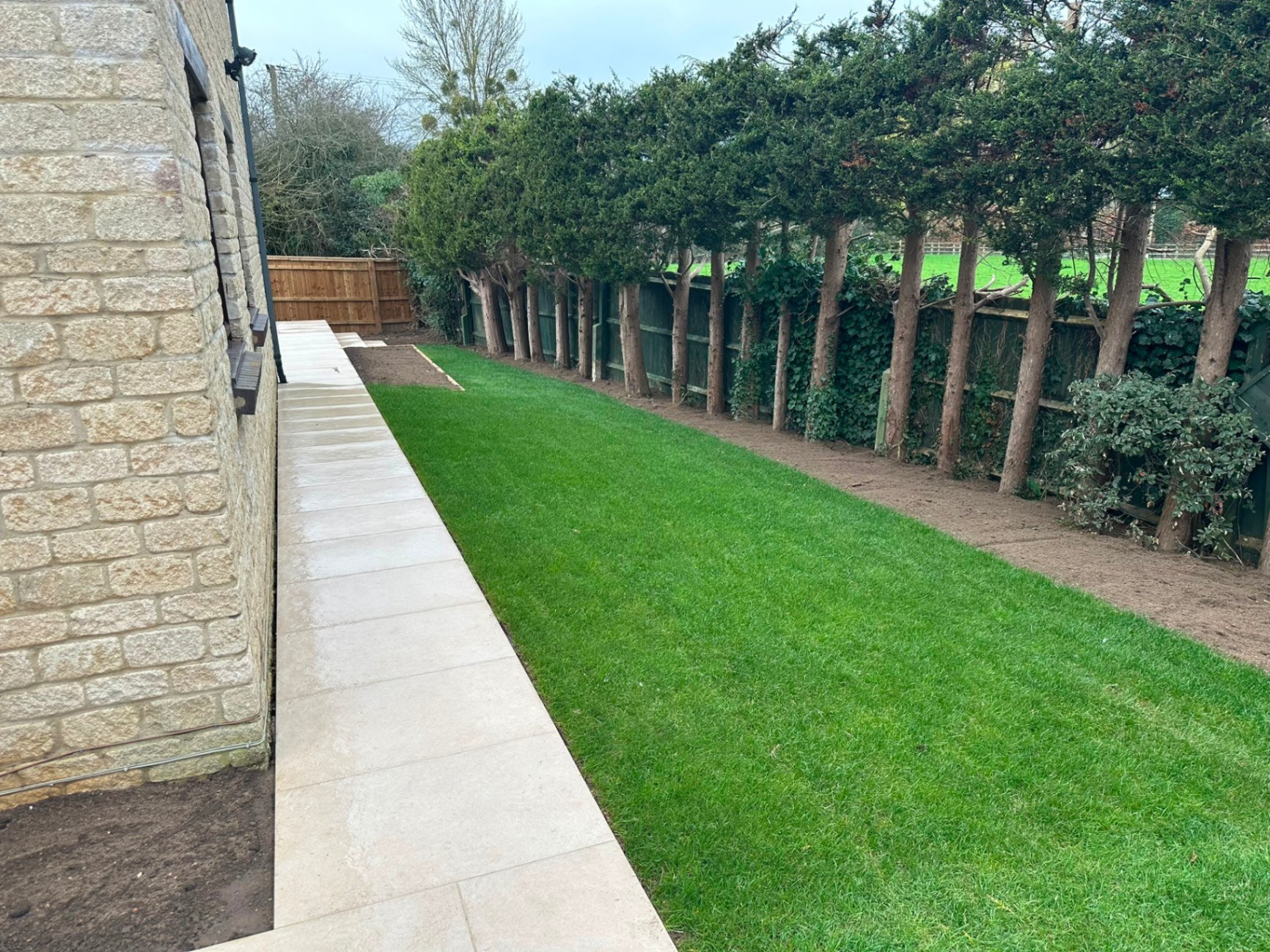
Newly turfed lawn with a smooth porcelain tile garden path alongside a stone house.
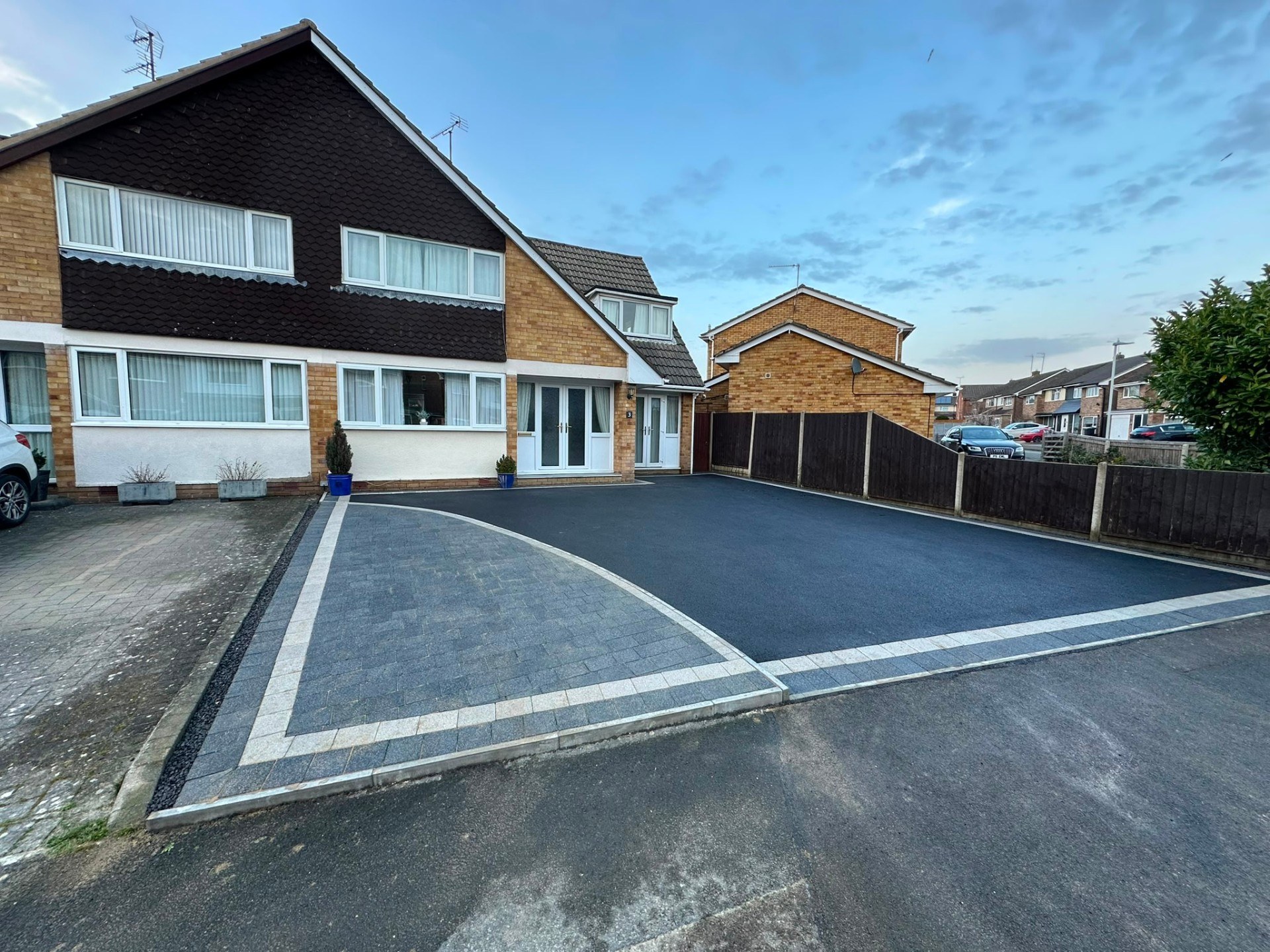
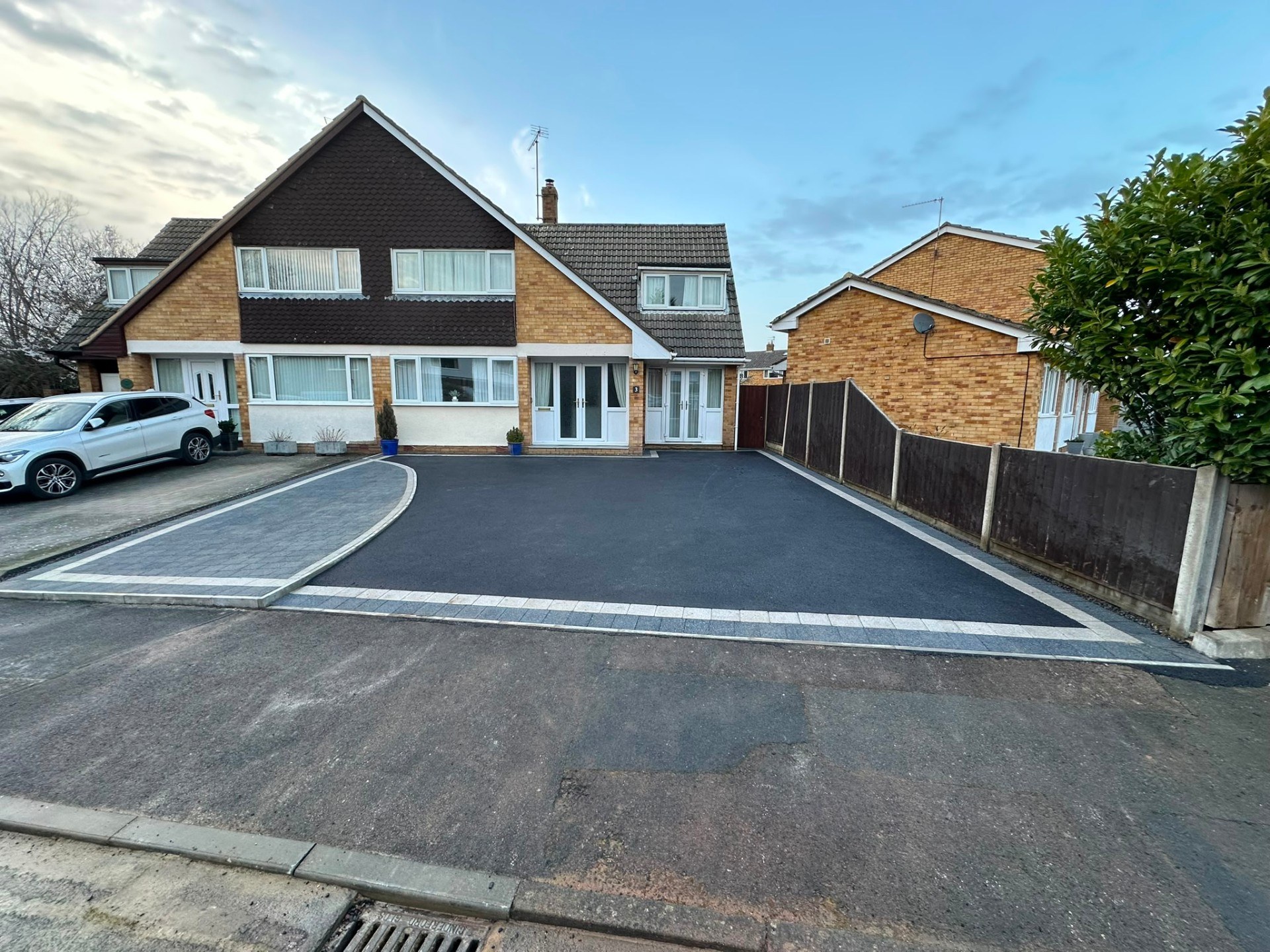
Large dark grey asphalt driveway with block paved border and apron detail in front of a house.
Modern tarmac driveway with decorative block-paving border and matching curved parking bay.
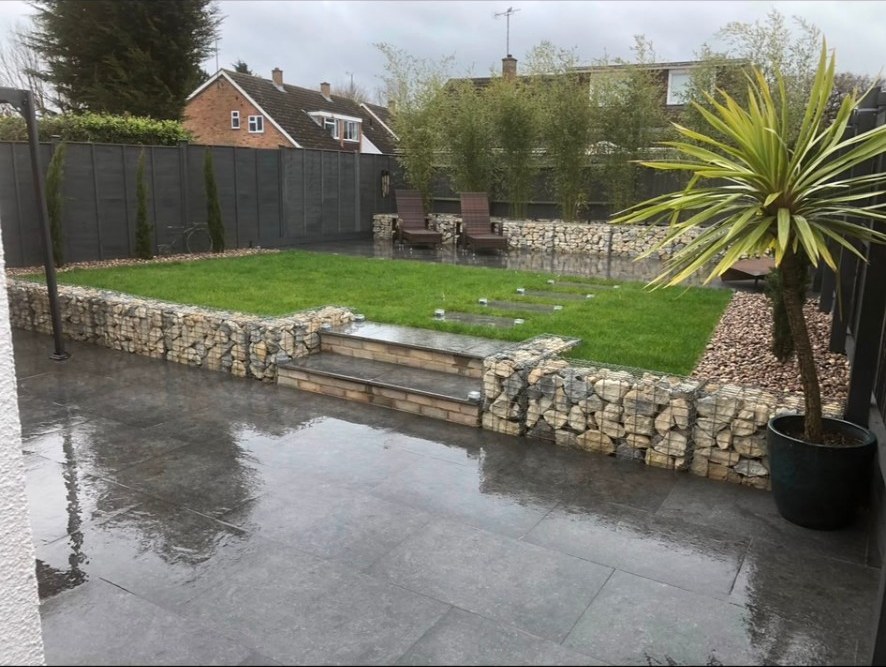
Contemporary garden with grey porcelain patio, gabion stone walls, lawn and bamboo screening.
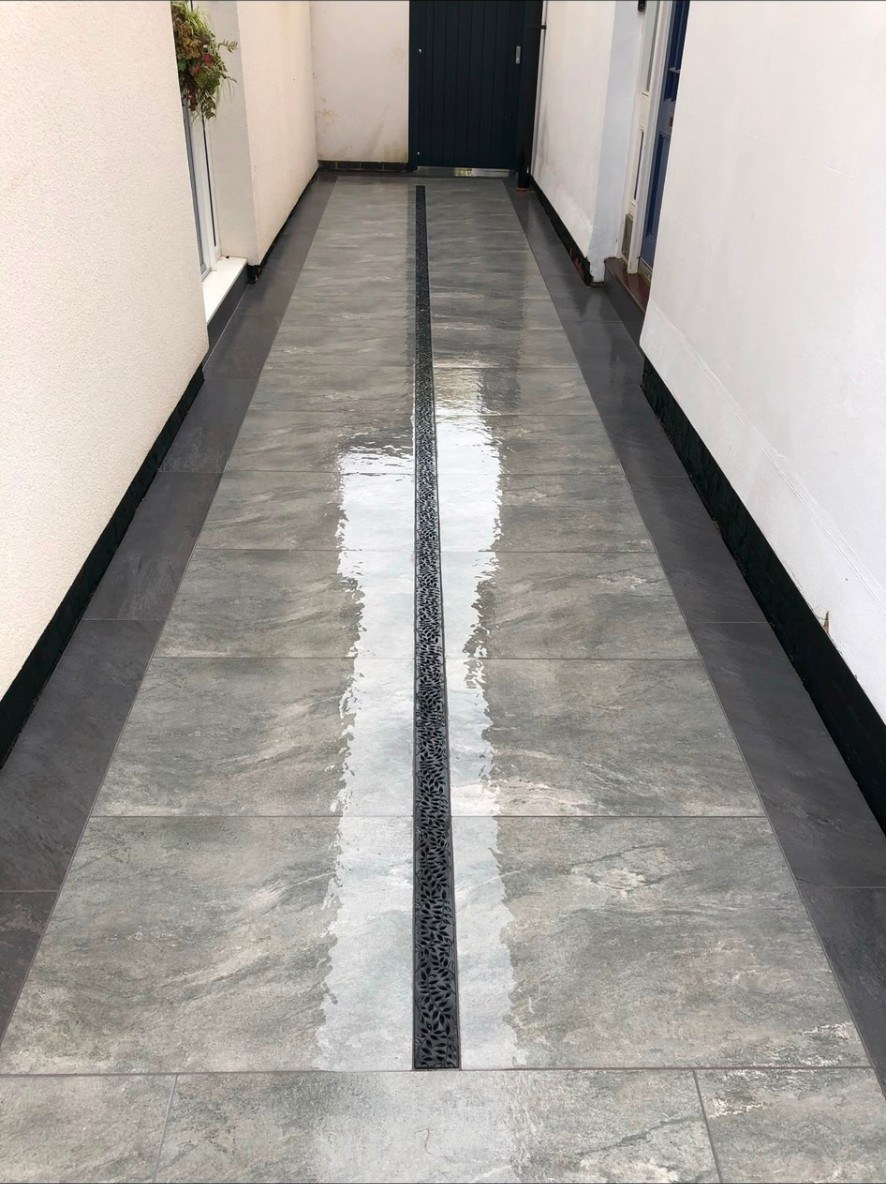
Contemporary grey porcelain paving path with central decorative drainage channel in a side return
Modern garden with porcelain patio, tiered steps, freshly laid lawn and timber fencing.
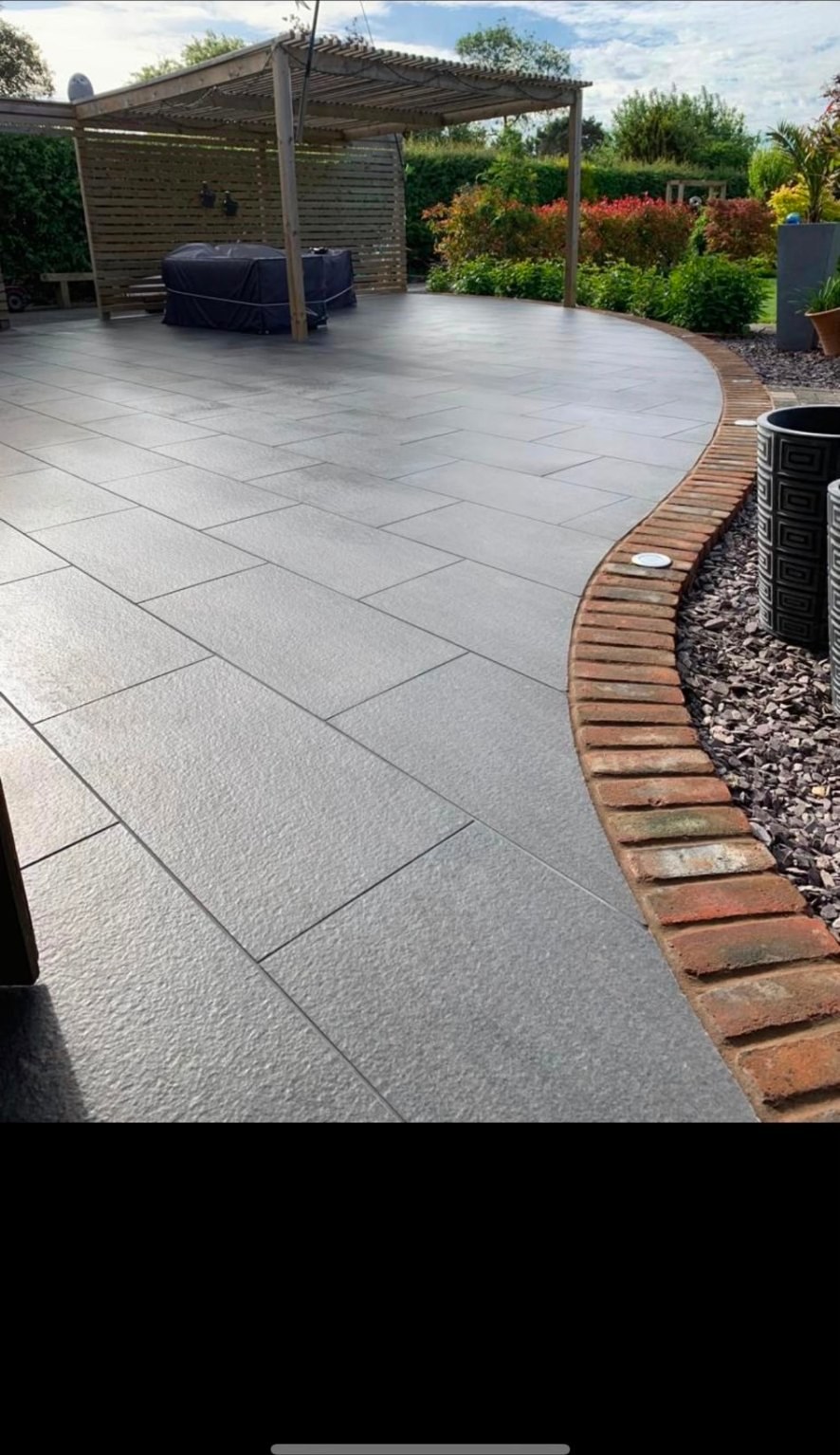
Contemporary grey porcelain patio with a curved brick edge and timber pergola
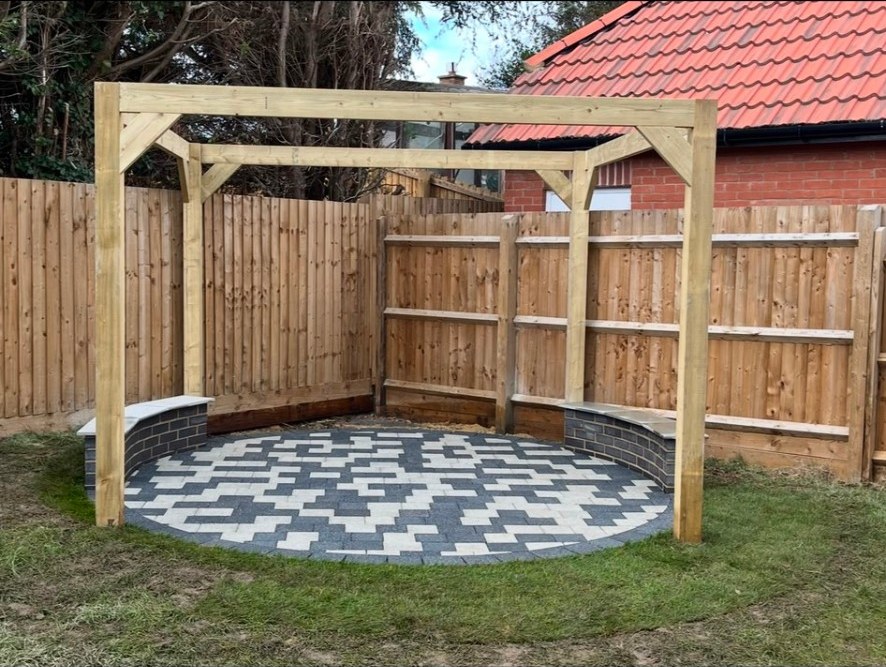
Circular block paving patio with timber pergola, brick seating, and new garden fencing.
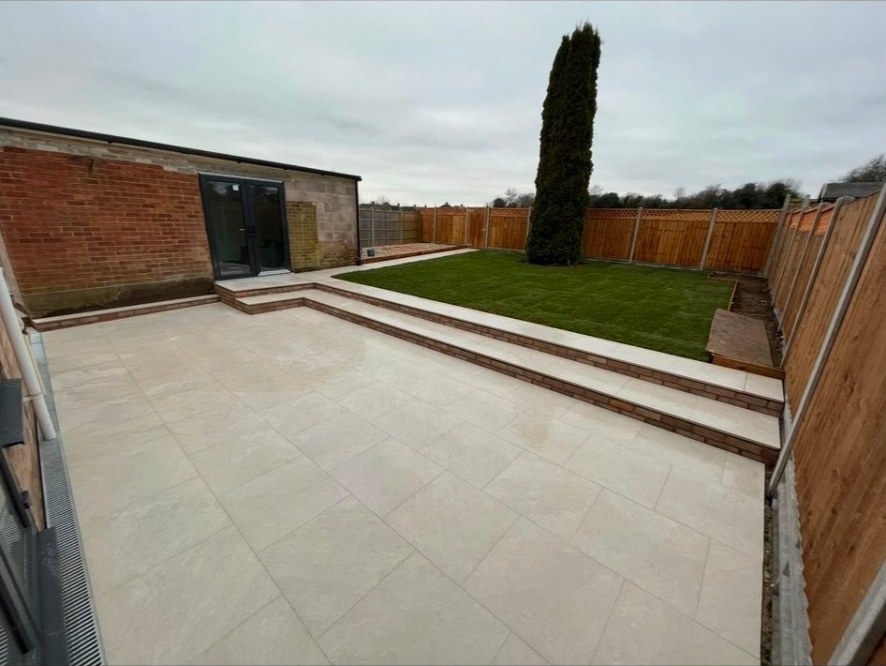
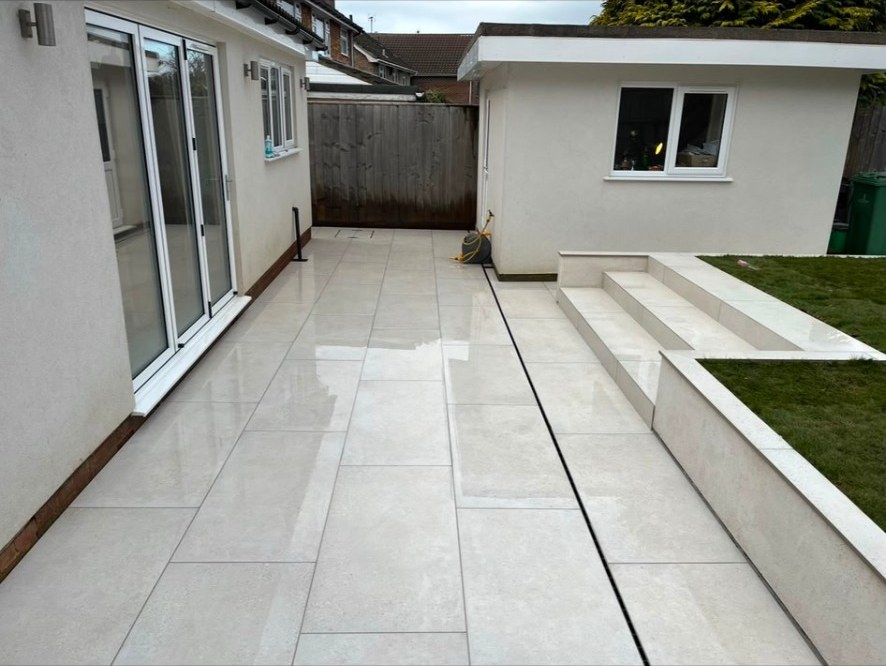
Contemporary light grey porcelain patio with matching steps and integrated drainage

Get a fixed-price quote you can actually trust.

On-site survey, accurate measurements, written specification, itemised pricing and a firm start date. No subcontracted estimators, no pressure, no surprise add-ons mid-build.

Free on-site survey, free written quote

Call NowGet Free Quote